

Today, sustainable solutions are becoming more popular in India. One of the best options is a commercial biogas plant. In this blog, you will learn about biogas plant maintenance. Proper maintenance is very important because it keeps the biogas plant running well. As a result, the plant produces more renewable gas and works more efficiently.
The biogas plant turns poultry waste into clean energy. However, some people throw many kinds of waste into the plant. Because of this, the biogas technology parts become rusty. As a result, the plant produces less renewable energy. Therefore, people should put only the right waste into the biogas plant.
 The points below explain the main parts of biogas plant maintenance. They include gas production, equipment life, and plant efficiency. As a result, you can keep the biogas plant running well and for a longer time.
The points below explain the main parts of biogas plant maintenance. They include gas production, equipment life, and plant efficiency. As a result, you can keep the biogas plant running well and for a longer time.
Why Regular Biogas Plant Maintenance Matters
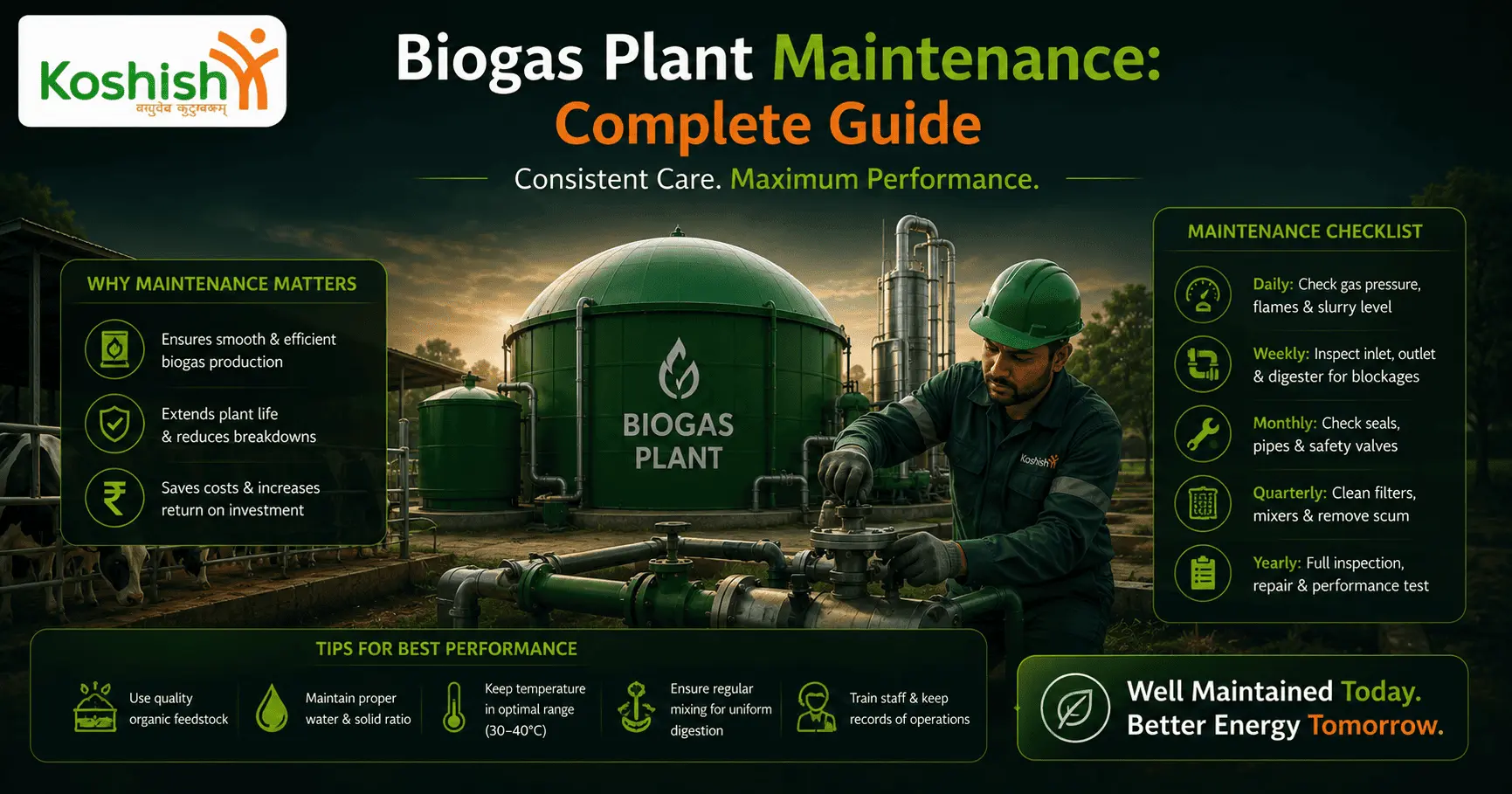
Regular commercial biogas plant maintenance is important, but it is not mandatory. Even if you skip regular maintenance, the plant can still produce biogas. However, regular weekly or monthly maintenance keeps the plant running smoothly. As a result, it improves efficiency, increases biogas production, and helps the plant perform better for a longer time. If poultry farmers regularly maintain the biogas plant and fix problems on time, the digester works better. It helps prevent sudden breakdowns and improves biogas production and plant efficiency. It also reduces repair and operating costs and keeps the plant safe and compliant.Commercial Biogas Plant Maintenance Checklist
A structured maintenance schedule helps a commercial biogas plant run smoothly and work efficiently. It also reduces the risk of sudden breakdowns. Routine Checks: First, check the gas pressure and daily biogas output to ensure the plant is working properly. As a result, you can confirm normal operation. Second, check the quality of the input material and the feeding schedule, because irregular feeding can lower gas production. Check pumps, mixers, and monitoring devices to make sure they work properly. Also, listen for any unusual noises or vibrations. Next, check for any strange smells, gas leaks, and slurry leaks around pipelines, valves, and joints. As a result, you can prevent safety risks and avoid loss of production. Weekly Checks: First, remove any blockages in filters and pipelines so gas and slurry can flow easily. Next, check all valves and pressure relief systems. Finally, make sure all safety systems work properly and function normally. Check the agitators to ensure they mix the digester material properly. Also, check the slurry to make sure it is well mixed and has the right moisture level. Monthly Checks: First, inspect the digester, pipelines, and storage tanks carefully. Look for rust, cracks, or any damage. Next, test all sensors, meters, and automatic systems. Make sure they are working properly and giving correct readings. Then, check all electrical wiring. Fix any loose wires or damaged parts. Finally, service all equipment regularly. This helps prevent problems and keeps the system running safely and smoothly.Common Biogas Plant Troubleshooting Issues
If a biogas plant is not maintained properly, some common problems can occur in the digester. These problems are as follows: Low Gas Production: Low gas production happens for several simple reasons. First, the feedstock may be poor in quality. Second, sudden changes in temperature can slow down gas formation. Third, if too much or too little waste is added to the digester, the system does not work well. As a result, gas production goes down. Gas Leakage Issues: Damaged pipelines, loose fittings, and faulty valves can cause gas leaks. This happens when regular biogas maintenance is not done. Foaming or Scum Formation: Sometimes, people put too much waste into the digester. This is called overfeeding. Also, the organic waste and water may not be mixed properly. Slurry Overflow or Blockages: If we do not maintain the system properly, the pipes can get blocked or the slurry can overflow.Best Practices for Slurry Handling for Digester Maintenance
There are several simple biogas plant maintenance practices that help you manage slurry better. They are given below:- Proper storage and transportation.
- Regular removal from the digester.
- Use digestate as organic manure.
- Prevent blockages and ensure smooth operation.
Tips to Increase the Lifespan of a Commercial Biogas Plant
- Follow the maintenance schedule on time.
- Use high-quality feedstock for better results.
- Do not overload the digester at any time.
- Train operators regularly for safe operation.
- Keep clear and correct maintenance records.
- Get professional inspections at regular intervals.