

How a Dairy Farm Biogas Plant Generate Gobar Gas?
A dairy farm biogas plant uses cattle dung as feedstock. Inside the digester, microorganisms break down the dung without oxygen. As a result, biogas is produced. The gas mainly contains methane and carbon dioxide. It can be used for cooking, heating, and power generation. The remaining slurry can also be used as bio-manure. MNRE confirms that cattle dung is a common feedstock for biogas plants. A cattle dung biogas plant is, therefore, a useful solution for farms that have a steady supply of dung.How the Dairy Farm Biogas Plant Cost Is Estimated
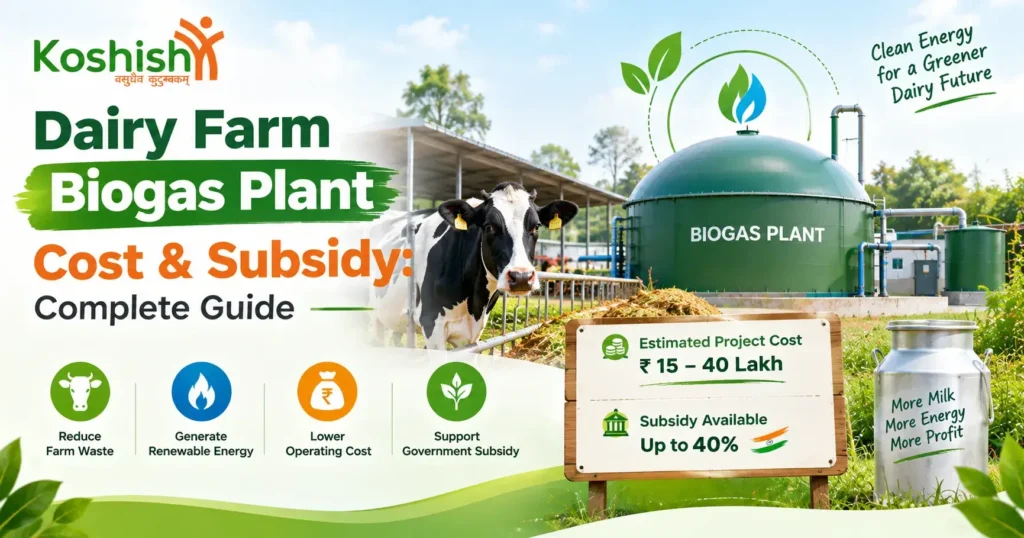
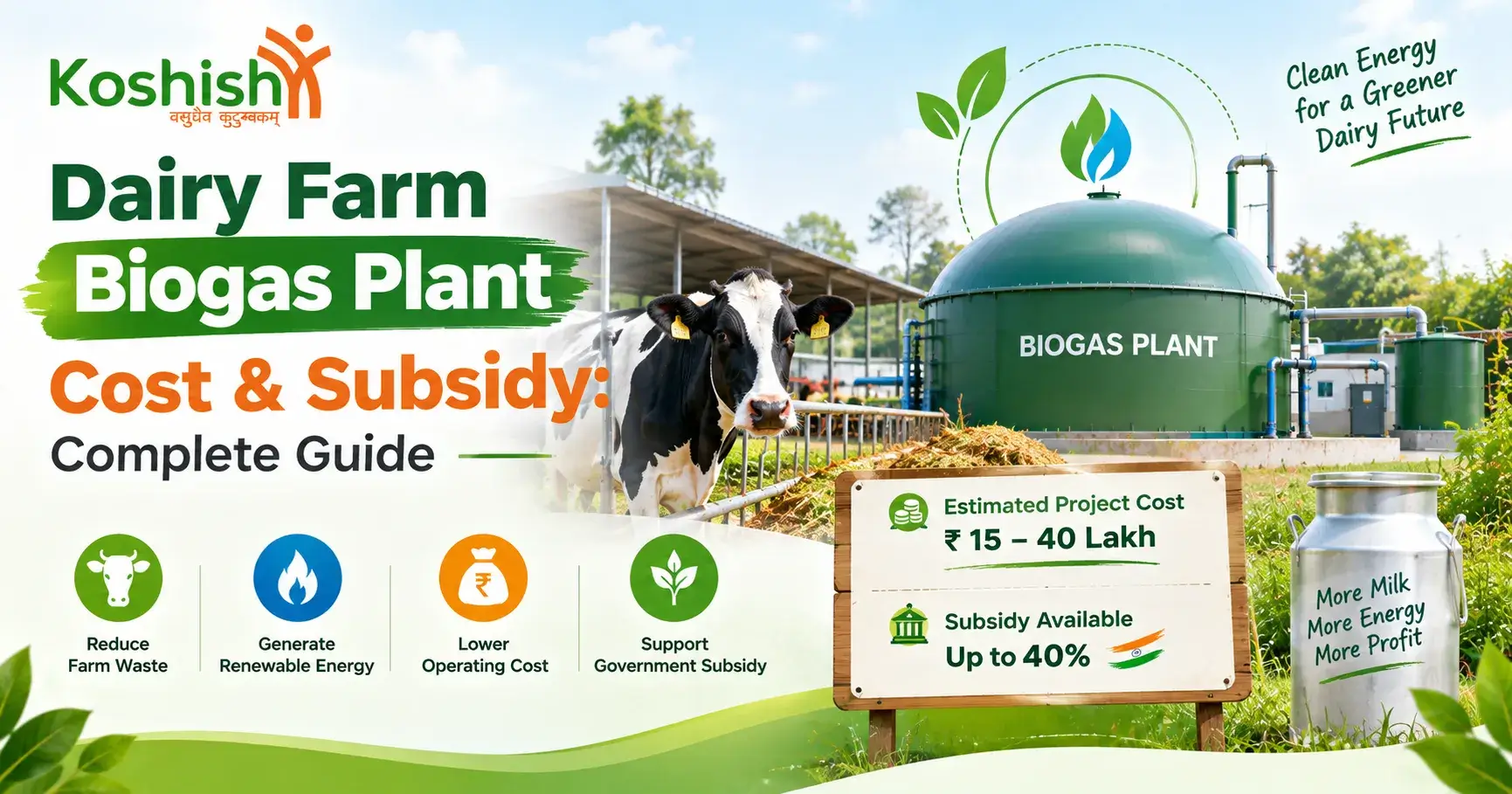
There are several factors on which the dairy farm biogas plant cost depends, mainly on the plant capacity. A small farm may need a small digester. On the other hand, a large dairy farm may need a bigger system with gas storage and power equipment. The main dairy farm biogas plant cost factors include plant capacity, the digester design, the construction material, the gas holder, the inlet and outlet systems, the pumps and pipelines, gas cleaning equipment, the generator, if needed, and land preparation, biogas plant installation and labour, and operation and maintenance. Therefore, the final dairy farm biogas plant cost should be calculated after a site survey and dung assessment.Dairy Biogas Plant Price: What Changes the Cost?
The dairy biogas plant price is not the same for every farm. First, the amount of dung must be checked. Next, the required gas output should be calculated. For example, MNRE guidance gives a simple reference for small plants: about 25 kg of cow dung and 25 litres of water can be used for a 1cum plant. As the plant size increases, the dairy biogas plant price also increases. However, larger plants can provide more gas and may support power generation. So, farmers should not select a plant only by looking at its initial price.Cow Dung Biogas Plant Cost in Brief
The cow dung biogas plant cost depends on the plant size and technology. A small household plant costs much less than a commercial dairy system. For example, MNRE’s published program information lists Central Financial Assistance for small plants from ₹9,800 to ₹52,800 for many states and categories, depending on plant size. Higher support is listed for certain hilly, North-Eastern, island, and SC/ST categories. Thus, the cow dung biogas plant cost after financial assistance can be lower than the initial project cost.Who Can Apply for Dairy Farm Subsidy?
For small plants, MNRE lists land, feedstock, water, and financial capacity among the basic requirements. For larger projects, the application may go through the State Programme Implementing Agency. A dairy farmer may need:- Suitable land
- Regular cattle dung supply
- Water supply
- Required investment share
- A suitable project plan
- Approval from the concerned agency
Is a Dairy Biogas Plant Worth Investing in?
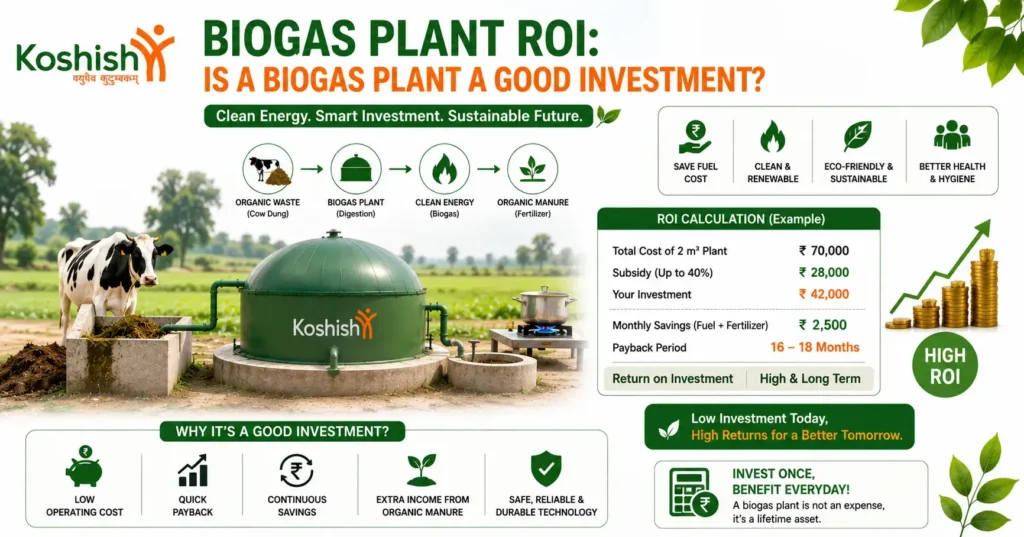
It can be a good investment for a dairy farm with regular dung supply. However, the return depends on plant size, gas use, electricity savings, manure value, project cost, and maintenance. Therefore, a proper feasibility study is important. The right dairy farm biogas plant cost should always be based on actual farm data rather than a fixed market price.Frequently Asked Questions (FAQ)
What is the dairy farm biogas plant cost?
The dairy farm biogas plant cost depends on several factors. These include the number of cows, daily dung supply, plant size, digester type, gas storage, and installation work. A small plant for a few cattle will usually need less investment than a large commercial plant.
Before buying a plant, farmers should check how much dung is available each day. They should also decide how they will use the gas. For example, the gas may be used for cooking, heating, or electricity. A proper site survey can help select the right plant size and give a more accurate cost estimate.
Is there a subsidy for a dairy biogas plant?
Government support may be available under applicable biogas and bioenergy programmes. A dairy farm subsidy can help reduce the amount that a farmer needs to invest. However, subsidy rules can change. The amount may also depend on plant size, location, beneficiary type, and the programme in force. Therefore, farmers should check the latest government guidelines before starting construction. It is also important to apply through the correct government agency or approved process. Do not assume that an older subsidy amount will apply to a new project.
What is the cow dung biogas plant cost?
The cow dung biogas plant cost depends mainly on the amount of dung available and the size of the plant. Other costs may include civil work, pipes, gas storage, pumps, installation, and other equipment. For example, a farm with a small number of cows may need a small plant. A large dairy farm may need a bigger system with additional gas cleaning or power equipment. Therefore, farmers should calculate the daily dung supply first. This helps avoid choosing a plant that is too small or too large for the farm.
Can a dairy farm produce electricity from biogas?
A dairy farm can use biogas to produce electricity if the plant is designed for power generation. A biogas generator can use methane-rich gas as fuel. However, the amount of electricity depends on the quantity and quality of biogas produced. It also depends on the efficiency and size of the generator. Small farms may use biogas mainly for cooking or heating. In contrast, larger farms may consider electricity generation. Before choosing this option, farmers should compare the equipment cost with their expected energy savings.
Is a dairy biogas plant a good investment?
A dairy biogas plant can be useful when a farm has a steady supply of cow dung and a regular need for energy. It can also provide useful manure from the digested slurry. However, the investment should be planned carefully. Farmers should calculate the dairy farm biogas plant cost, expected gas output, maintenance costs, energy savings, and possible government support. The right plant size is also important. A plant that matches the farm’s dung supply and energy needs can be easier to operate and maintain.