
Poultry farms produce a lot of chicken manure, feathers, and bedding waste. If left unmanaged, this waste can cause bad smells and pollute the soil and water. However, farmers can turn this waste into useful energy.
Poultry litter to biogas is one way to make fuel from farm waste. It can help poultry farms reduce waste, lower energy costs, and create useful manure. Moreover, this waste to energy poultry solution can support cleaner farming. In this blog, we will explain the process, gas yield, costs, and profits in simple words.
Overview of Poultry Litter to Biogas
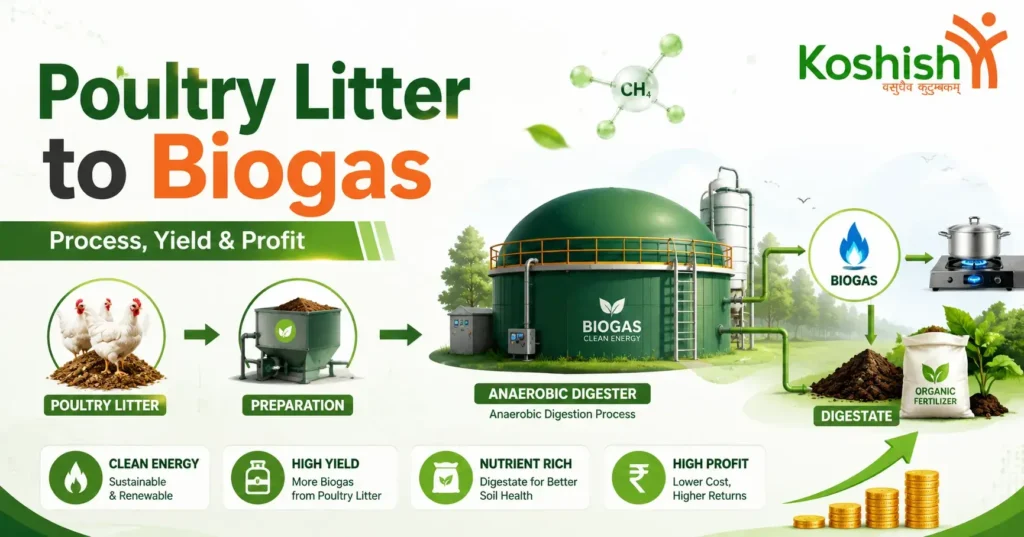
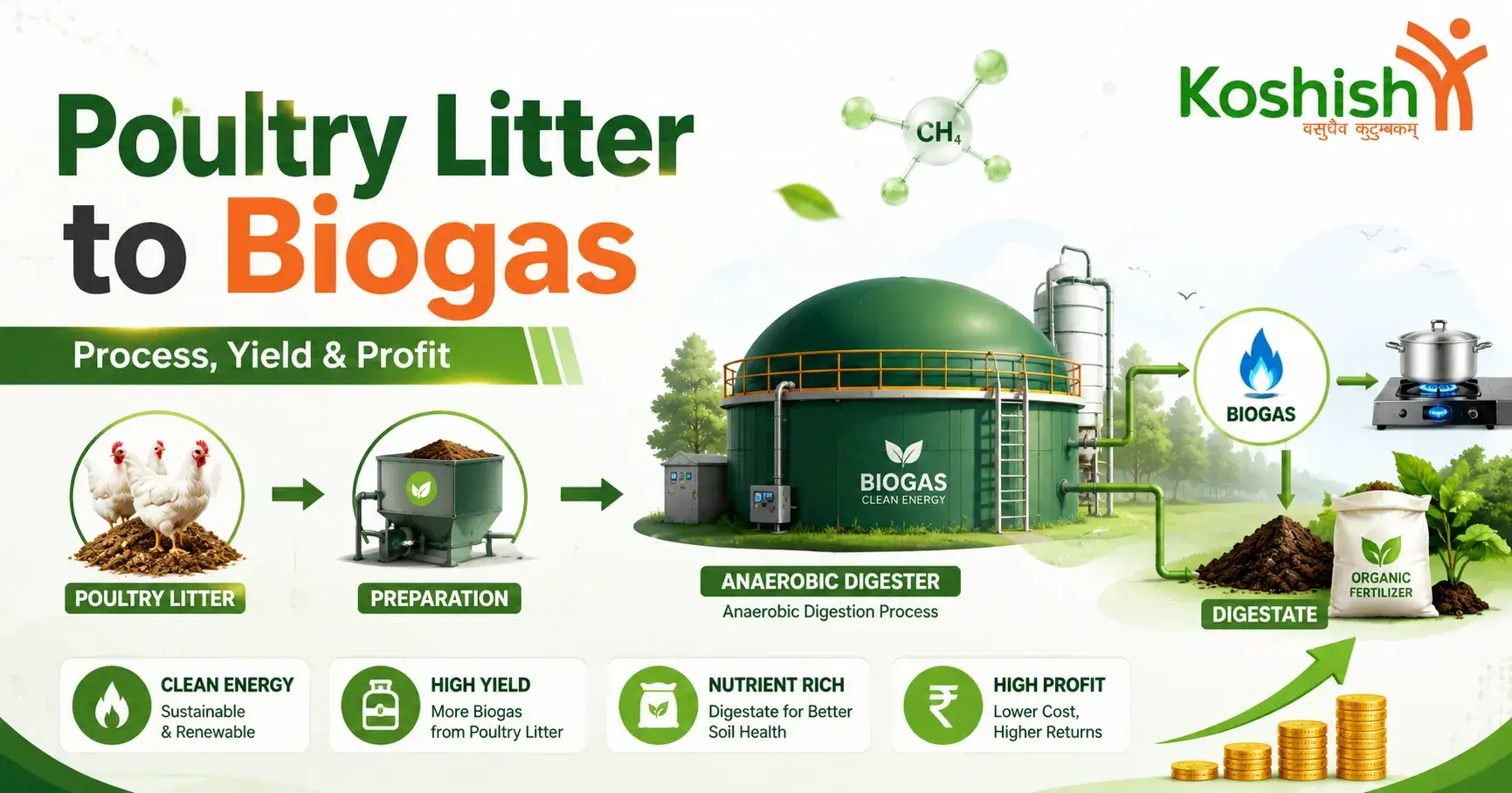
Poultry litter contains chicken manure, feathers, spilled feed, and bedding materials such as rice husk. A biogas plant uses tiny living organisms to break down this waste without oxygen.
As a result, the plant produces biogas. This gas contains methane, which can be used for heating, cooking, or power generation with suitable equipment. Therefore, poultry litter to biogas can turn farm waste into a useful resource. This waste to energy poultry method also produces digestate, which may be used as a soil product after proper treatment and testing.
Also Check: Biogas Plant Loan & Government Subsidy: Financing Options in India
How Does the Poultry Litter to Biogas Process Work?
The process has five main steps.
- Collect the waste: First, collect chicken manure and suitable litter from the poultry farm.
- Prepare the feed: Next, remove unwanted materials and mix the waste with water or other suitable materials as needed.
- Feed the biogas plant: Then, send the prepared material into an airtight digester.
- Produce biogas: Inside the digester, microbes break down the waste without oxygen. This creates methane-rich biogas.
- Use the gas: Finally, use suitable equipment to produce heat or electricity. The remaining digestate can be treated for safe use.
However, poultry litter to biogas needs careful planning. Too much ammonia, poor moisture control, or an unsuitable mix can slow the process. Therefore, proper plant design is important for steady poultry litter gas production.
Also Check: Biogas Plant Cost vs Savings: Calculate Your Potential Payback
Chicken Manure Biogas Yield: How Much Gas Can You Get?
The chicken manure biogas yield depends on several factors, such as moisture, feed quality, temperature, and digester design.
Dry poultry litter may contain useful organic matter. However, it can also have high nitrogen levels. During digestion, this nitrogen can create ammonia, which may harm the microbes. Therefore, the chicken manure biogas yield cannot be estimated from waste weight alone. A plant designer should check the waste and run suitable tests.
For better poultry litter gas production, the plant may need controlled mixing, water, or other feed materials. These steps can help improve the digestion process. Also, methane from poultry waste varies with the waste mix and operating conditions. As a result, no single gas yield applies to every poultry farm.
Cost and Profit, Poultry Litter to Biogas
The cost of a plant depends on its size, daily waste supply, digester type, gas storage, and end use. Therefore, farms should get a site-based quote instead of relying on a fixed price.
A poultry litter to biogas project may offer several benefits:
- Lower energy bills: Use biogas for suitable heating or power needs.
- Better waste management: Reduce the amount of untreated waste on the farm.
- Extra value: Treat digestate for possible use as a soil product.
- Cleaner operations: Support a practical waste to energy poultry system.
However, profits depend on the cost of equipment, daily gas output, energy use, and maintenance. In addition, methane from poultry waste must be handled safely because it is flammable.
Before investing, compare expected savings with the full project cost. This will help you understand the payback period.
Also Check: Biogas Plant ROI: Is a Commercial Biogas Plant a Good Investment?
Why Choose the Right Biogas Plant Installer?
Choosing the best biogas plant installer is important because poultry waste can be difficult to digest. An experienced team can assess the waste, plan the digester, and select suitable gas equipment.
Moreover, the installer should explain expected gas output, operating costs, safety measures, and maintenance needs. This helps farmers make a better investment decision.
A well-planned poultry litter to biogas system can support long-term waste management and energy savings. However, the design must match the farm’s real waste supply.
Frequently Asked Questions (FAQ)
Can chicken manure be used to produce biogas?
Yes, chicken manure can be used to produce biogas. However, it needs careful treatment because it may contain high levels of nitrogen and ammonia. These can affect the microbes inside the digester. Therefore, a suitable plant design, proper mixing, and regular monitoring are important. A waste test can help determine whether the manure needs water or other feed materials before digestion.
What affects chicken manure biogas yield?
The chicken manure biogas yield depends on the amount of organic matter, moisture, temperature, and digestion time. In addition, ammonia levels can affect gas production. Therefore, two farms with the same amount of manure may get different results. Testing the waste before installation can help estimate the likely output and identify the right process for better plant performance.
Is poultry litter to biogas profitable?
Poultry litter to biogas can be profitable when a farm has a steady supply of waste and can use the gas effectively. For example, the gas may replace some purchased fuel or support power generation with suitable equipment. However, the final savings depend on plant cost, maintenance, gas output, and energy prices. Farmers should compare these costs before investing.
How can farmers improve poultry litter gas production?
Farmers can get more gas from poultry litter by using the right mix of waste and water. They should also control moisture, temperature, and ammonia levels. In addition, they should not add too much waste at once. Regular checks can help find problems early. A trained plant operator can suggest changes based on the waste quality and gas produced.
Is methane from poultry waste safe to use?
Methane from poultry waste can be used as fuel after it is collected and treated with the right equipment. However, biogas can catch fire, and gas leaks can be dangerous. So, the plant must have good airflow, safe gas pipes, leak checks, and safety controls. Trained workers should install and maintain the plant. Farmers should never handle biogas without proper safety measures.
How can Koshish Sustainable Solutions help with a poultry biogas project?
Koshish Sustainable Solutions offers biogas solutions for farms and businesses. First, we study the waste available, energy needs, site conditions, and expected gas output. This helps us plan the plant and choose the right equipment. If you want to turn poultry litter into biogas, contact Koshish Sustainable Solutions. Our team can discuss your needs and help you find the right solution for your farm.
How do I choose the best biogas plant installer?
To choose the best biogas plant installer, check their experience, past projects, and technical skills. Also, make sure they offer support after installation. Ask how they will test your poultry waste and estimate gas production. In addition, ask about the total cost, maintenance, safety, and expected savings. Koshish Sustainable Solutions can help you understand your farm’s needs and find a suitable biogas solution.