
Biogas for dairy industry is an effective solution because dairy farms generate large amounts of cattle dung and waste every day.
If you do not manage waste properly, you may face hygiene issues, and it also harms the environment. But you can overcome these problems by installing a biogas plant.
By installing a biogas plant, farmers can produce gas for cooking, heating, and electricity. Many dairy farms in India have already setup biogas plant that help them to save money on energy and reduce pollution.
In this blog, we will explain how biogas for dairy industry helps manage waste, generate clean energy, and how a cattle dung biogas plant works.
What Is a Biogas Plant?
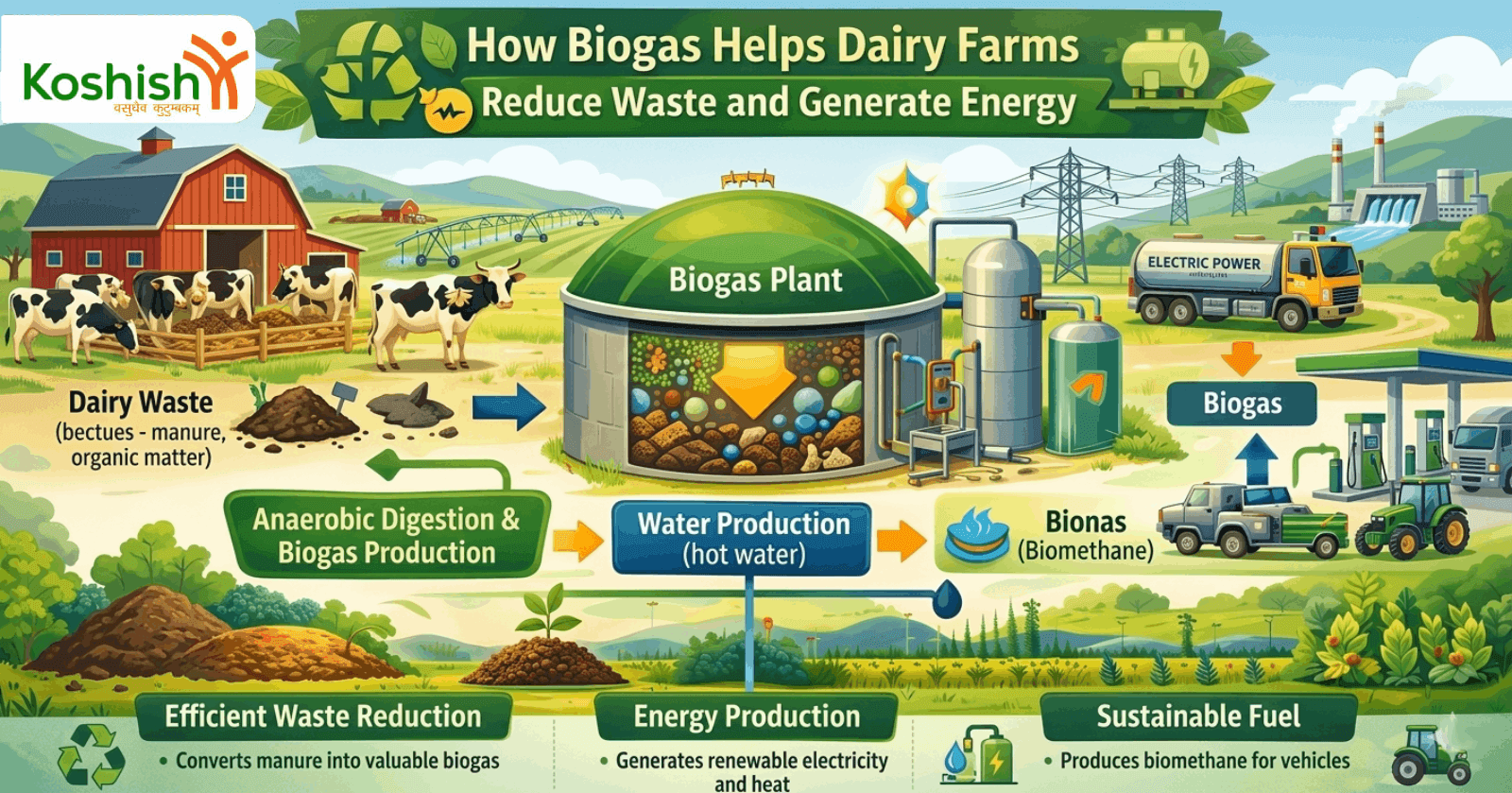
The biogas plant is a renewable energy solution. It converts organic waste such as cow dung, manure, kitchen waste, etc, into renewable energy. This energy can be used as cooking gas or upgraded to CNG for vehicles and other uses.
Biogas is produced through a natural process called anaerobic digestion. It not only saves energy costs but also helps reduce greenhouse gas emissions.
Biogas for dairy industry is becoming widely adopted in Rural areas. Many renewable energy dairy farms are now using this technology to generate clean and sustainable power.
What Is a Cow Dung Biogas Plant?
The Biogas is generated from the Cow Manure. The Cow Dung Biogas is produced by storing the it in the digester for approx 45 days, during this period methane gas is produced as well as carbon dioxide.
These organic gases can be used for cooking, heating, or generating electricity. It is a affordable and eco-friendly alternative to fossil fuels.
It not only reduces bad smell and harmful germs but also leaves behind a nutrient-rich slurry. This leftover, called digestate, works as an excellent organic fertilizer for crops. Biogas for dairy industry and cattle dung biogas plant helps farmers produce both energy and fertilizer from the same waste. This approach is adopted by many renewable energy dairy farms.
Waste Challenges in Dairy Farms
Dairy farms produce a large amount of waste every day in the form of cow dung, leftover feed, and bedding material. If this waste is not managed properly, it can create many challenges, such as;
Bad Smell & Unhygienic Conditions
When cow dung and urine are stored or left on a dairy farm, they produce a bad smell that spreads in the farm. This smell not only makes the environment harmful for farmers and workers but also affects the health of the animals.
Water Pollution
Waste from dairy farms, like cow dung, urine, and leftover feed, is dumped into the nearby rivers, which can further flow into nearby water sources. This pollutes rivers, ponds, and groundwater, making the water unsafe for drinking.
Greenhouse Gas Emissions
When cow dung and organic waste break down, they release methane, a gas that contributes to global warming. Large dairy farms produce a lot of this gas, which can harm the environment.
By installing a biogas plant for dairy industry, methane from cow dung and farm waste is captured in about 45 days and turned into clean energy, helping reduce pollution.
Land Management Problems
Releasing too much untreated cow dung on fields can harm the soil. It may cause nutrient imbalance, reduce fertility, and affect crop growth.
By setting up a biogas plant or a cattle dung biogas plant, farmers can convert organic waste into nutrient-rich fertilizer that makes soil healthy and fertile.
Rising Disposal Costs
With increasing herd sizes, handling and disposing of waste has become expensive and labor-intensive.
These challenges not only affect the environment and public health but also increase operational costs for farmers. Biogas plants help reduce these costs by converting waste into useful resources, making them an important part of renewable energy dairy farms.
Benefits of Biogas
Renewable Source of Energy
Biogas is made from organic materials like plants, animal waste, and food leftovers. These raw materials can be reproduced, making biogas a green energy source. It also helps reduce the harmful effects of improper waste disposal.
Utilization of Waste
Instead of letting waste rot in landfills, it can be converted into biogas. This reduces environmental hazards by cutting methane, carbon dioxide, and other greenhouse gases. The waste is transformed into energy for electricity, heating, cooking, and fertilizer.
Builds a Circular Economy
Waste from animals, food, crops, and wastewater can cause harm if not managed properly. Biogas turns this waste into something useful, energy for electricity and heating, natural gas for cooking and vehicles, and nutrient-rich digestate as fertilizer. Biogas for dairy industry also supports a sustainable approach.
Good Alternative for Rural Areas and Developing Countries
In places with limited electricity, biogas offers an affordable and reliable energy solution. It can be set up on both small and large scales, providing energy for cooking, heating, and electricity in rural and developing areas.
Wrapping Up
Biogas for dairy industry is an easy and eco-friendly solution for managing cow dung and waste. It turns waste into clean energy for cooking, heating, and electricity, and fertilizer for fields. A biogas plant also reduces smell, water pollution, greenhouse gases, and disposal costs, while giving farmers an affordable energy option.
Frequently Asked Questions
What is biogas for the dairy industry?
Biogas for the dairy industry is energy produced by converting cow dung and other organic waste from dairy farms into clean gas using a biogas plant.
What is a cattle dung biogas plant?
It is a system that turns cow dung into biogas and nutrient-rich fertilizer using a sealed tank called a digester.
Why is biogas important for dairy farms?
It helps manage large amounts of cattle dung, cuts operational costs, and promotes sustainable farming practices.
What is a waste-to-energy dairy farm?
It is a dairy farm that converts cow dung and organic waste into energy like biogas, instead of letting it pollute the environment.