
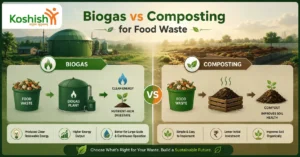
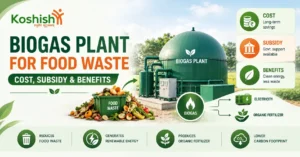
With rising fuel prices and increasing focus on renewable energy, biogas plants are becoming a practical solution for waste management and energy generation in India. From small farms to large industrial facilities, businesses and households are investing in biogas systems to convert organic waste into clean fuel and organic fertilizer.
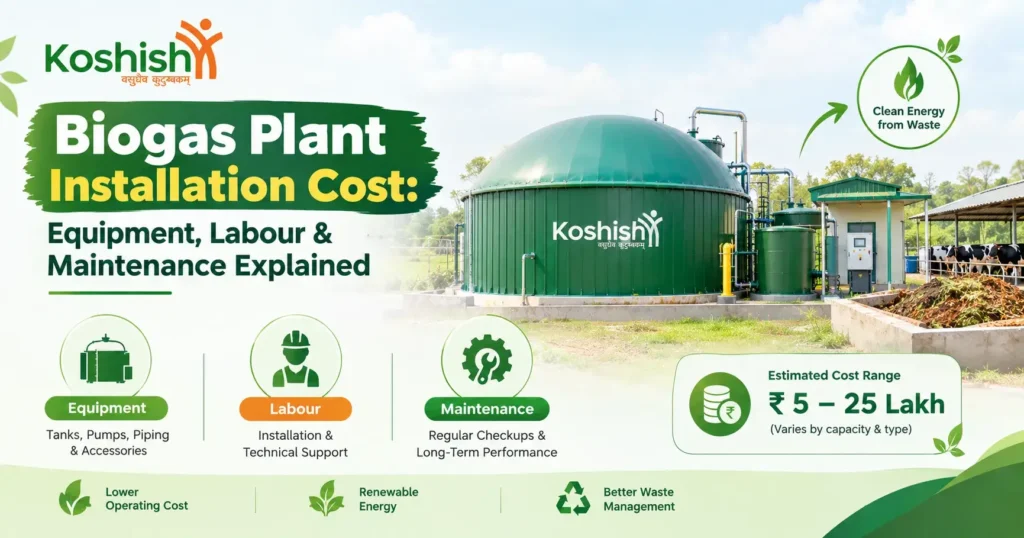
However, one of the most common questions remains: What is the actual biogas plant cost in India in 2026? The answer depends on plant size, technology, raw material availability, and installation requirements.
This blog explains the biogas plant price, factors affecting costs, ROI timeline, and hidden expenses associated with setting up a biogas system.

What is Biogas Plant Technology?
A biogas plant is a system that converts organic waste such as cattle dung, poultry litter, food waste, or industrial organic waste into biogas through anaerobic digestion. The gas produced mainly contains methane and can be used for cooking, heating, electricity generation, or as vehicle fuel after purification. Biogas plants are widely used in:- Dairy farms
- Poultry farms
- Food processing industries
- Distilleries
- Municipal waste projects
- Residential communities
Biogas Plant Cost in India by Plant Size
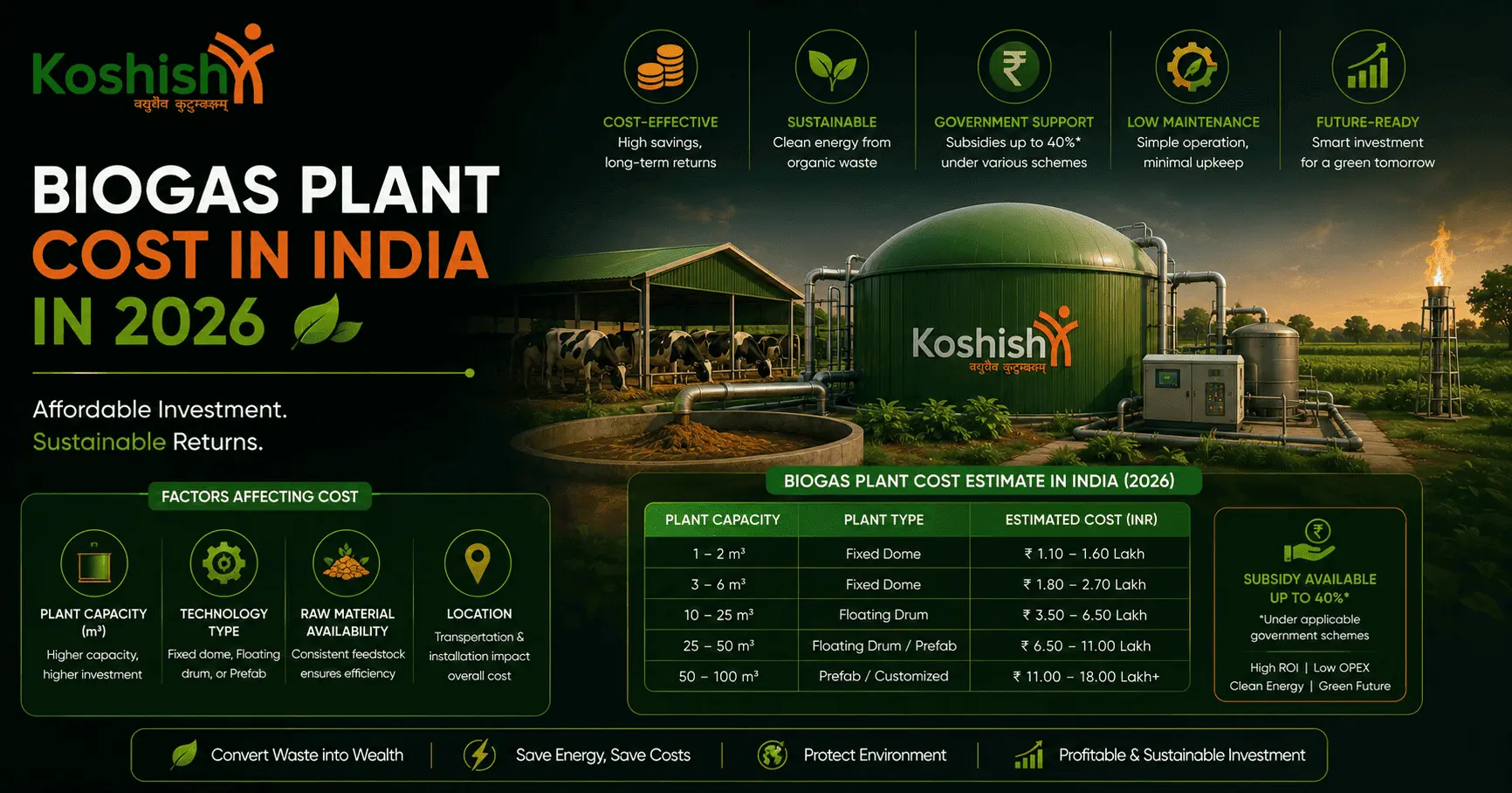
The installation cost biogas plant varies significantly depending on the size and application: Domestic Biogas Plant: This Biogas plant is usually used to generate cooking gas. The farmers who have approximately 10k-25k animals get this biogas plant installed, just to get the collected organic waste utilised by turning it into renewable energy. The domestic biogas plant cost in India is around ₹50,000 to ₹1,00,000. Commercial Biogas Plant: Commercial systems are used in hotels, institutions, and medium industries. The Commercial Biogas Plant cost in India starts from 10 lakh and goes above it, depending upon the Biogas plant size.Factors Affecting Biogas Plant Price
There are several factors that need to be taken care of and looked into before getting a commercial biogas plant installed. Plant Size and Capacity: Larger plants naturally cost more because they require larger digesters, gas holders, pipelines, and feeding systems. However, bigger plants usually offer better long-term returns. Type of Feedstock: Different waste materials require different processing technologies. Poultry waste and industrial sludge may need specialized handling systems, increasing costs. Technology Used: The choice of technology directly affects pricing. Common technologies include:- Fixed dome systems
- Floating drum plants
- Balloon digesters
- Continuous stirred tank reactors (CSTR)
- Plug-flow digesters
Hidden Expenses in Biogas Plant Installation
Many investors focus only on equipment costs and overlook additional expenses that can affect project budgets. Transportation Costs: Transporting digesters, machinery, and raw materials to remote locations can significantly increase expenses. Maintenance and Repairs: Regular maintenance of pipelines, pumps, mixers, and gas storage systems is necessary for smooth operation. Skilled Labor: Industrial biogas plants require trained operators and technical supervision. Feedstock Collection: For large plants, waste collection and transportation can become a recurring operational cost. Government Approvals: Industrial and commercial projects may require environmental clearances, pollution control approvals, and safety certifications. Gas Storage and Distribution: Additional storage tanks and pipelines may be required depending on the end use of the gas.ROI Timeline for Biogas Plants
One of the biggest advantages of investing in biogas is the long-term savings on fuel and electricity. Domestic Biogas Plant: The ROI Period: 2–4 years. Savings mainly come from reduced LPG usage and organic fertilizer production. Commercial Biogas Plant: The ROI Period: 3–5 years. Savings through fuel replacement, waste management reduction, and electricity generation.Government Subsidies and Financial Support
The Indian government continues to support renewable energy projects through subsidies and financing schemes. Support may include:- Capital subsidies
- Low-interest loans
- Waste-to-energy incentives
- Carbon credit opportunities
- Bio-CNG promotion schemes
Is Investing in a Biogas Plant Worth It in 2026?
Yes. With rising energy prices and stricter waste management regulations, biogas plants are becoming increasingly profitable in India. The importance and benefits include the Biogas Plant:- Reduced electricity and fuel costs
- Sustainable waste management
- Organic fertilizer production
- Lower carbon emissions
- Long-term energy independence