

Bioenergy is considered the most versatile and the sole sustainable solution for turning organic waste into energy. The poultry industry is one of the fastest-growing agricultural sectors, but it also comes with high operational expenses. Among these costs, electricity and fuel consumption are major factors. Poultry farm energy cost savings require continuous power for lighting, ventilation, heating, cooling systems, feeding equipment, and water supply. Rising diesel and electricity prices are making poultry farming more expensive every year.
To overcome these challenges, many renewable energy poultry farm owners are turning toward biogas technology. By converting poultry litter and other organic waste into renewable energy, farms can significantly reduce their electricity costs and reliance on diesel generators. Biogas systems not only lower operating costs but also create a more sustainable and profitable farming model.
Understanding Energy Consumption in Poultry Farms
Poultry farms achieve energy cost savings in several ways throughout their daily operations. The largest energy requirements generally include:
- Ventilation and exhaust fans
- Brooder heating systems
- Lighting for sheds
- Water pumping systems
- Feeding equipment
- Cooling systems during summer
- Waste management operations
In large commercial poultry farms, electricity bills can become a major financial burden. Farms in rural areas also face power cuts and unreliable electricity supply, often forcing farmers to rely on diesel generators. Diesel replacement in poultry farms has therefore become an important goal for reducing operating expenses.
What is a Biogas System?
A biogas system converts organic waste such as poultry litter, manure, feed residue, and wastewater into usable gas through anaerobic digestion. In this process, microorganisms break down organic matter in the absence of oxygen, producing biogas that mainly contains methane. The produced biogas can then be used for:
- Electricity generation
- Heating poultry sheds
- Cooking and water heating
- Running farm equipment
- Replacing diesel fuel in generators
The remaining byproduct, called slurry or digestate, can be used as an organic fertiliser for agriculture. How Biogas Reduces Electricity Cost in Poultry Farms
There are various ways through which the electricity cost is reduced in poultry farms:
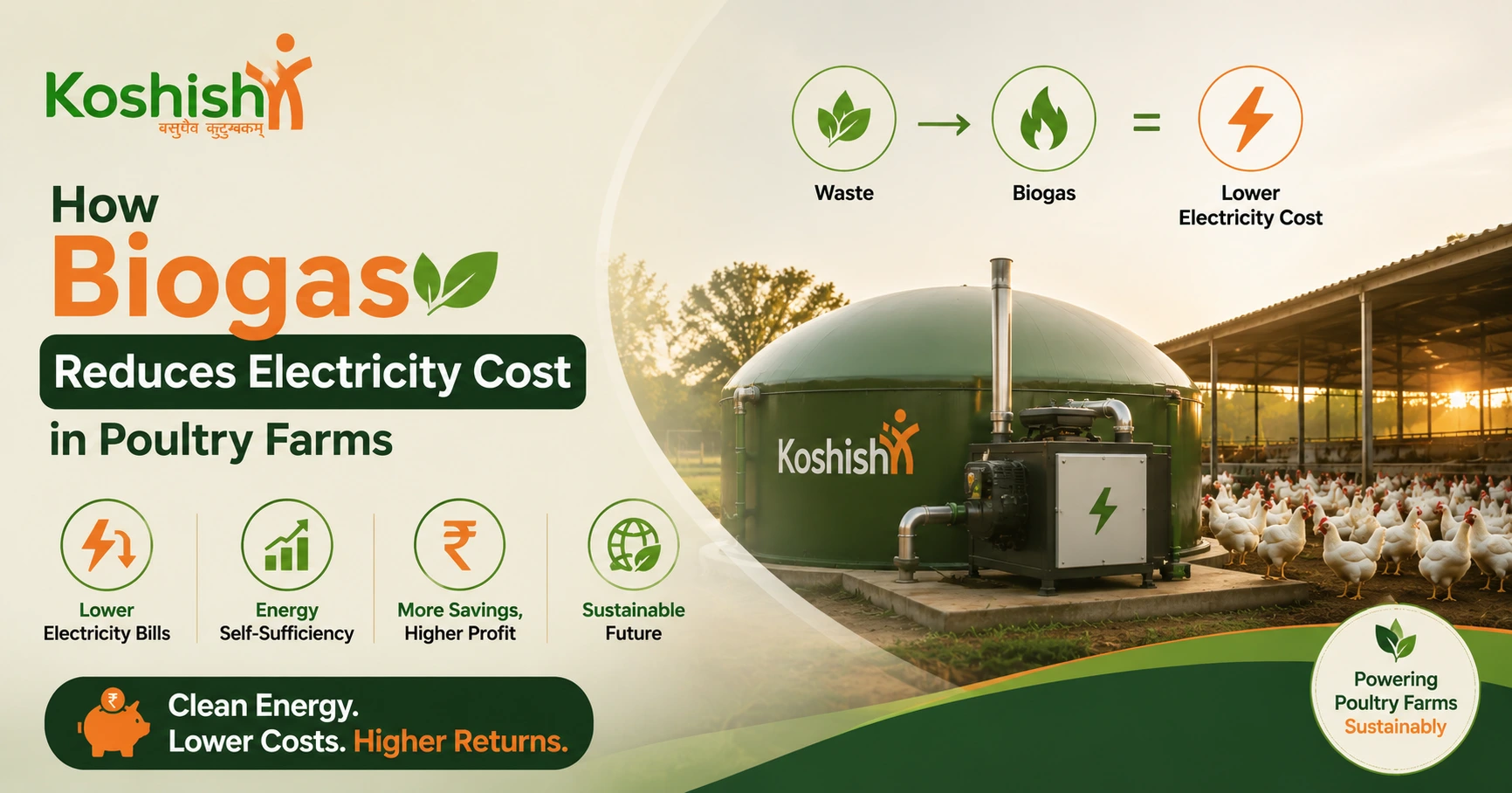
Generating Electricity from Poultry Waste: One of the biggest advantages of biogas electricity in poultry farms is the ability to generate on-site power. Instead of relying entirely on the grid, farms can generate their own electricity with biogas-powered generators.
This reduces monthly electricity bills and provides energy security during power outages. Large poultry farms can offset a major portion of their electricity demand through biogas-based power generation.
Since poultry farms produce a continuous supply of waste, the fuel source for energy production is readily available every day.
Biogas Usage for Heating and Electricity: Heating is another major energy expense in poultry operations, especially during winter and brooding periods. Young chicks require controlled temperatures for healthy growth. Biogas can be directly used in heating systems for:
- Brooder heating
- Water heating
- Space heating in sheds
Using biogas instead of LPG, coal, or diesel can significantly reduce fuel expenses. Simultaneously, electricity produced from biogas can power fans, lights, and feeding systems.
This dual usage of biogas for heating and electricity makes the system highly efficient and economical.
Diesel Replacement in Poultry Farms
Many poultry farms in remote areas use diesel generators due to unreliable grid power. However, diesel prices continue to increase, making power generation expensive.
Biogas offers a cleaner and cheaper alternative. Farms can use biogas generators for backup power or even primary electricity generation. This reduces diesel consumption and lowers fuel transportation costs. The benefits of diesel replacement in poultry farms include:
- Lower fuel expenses
- Reduced carbon emissions
- Less dependence on fuel suppliers
- Improved operational reliability
- Better sustainability performance
Replacing diesel with renewable energy in poultry farms also improves environmental compliance and supports green farming initiatives.
Poultry Farm Power Savings Through Biogas
Biogas systems can create substantial poultry farm power savings over time. The exact savings depend on factors such as:
- Farm size
- Number of birds
- Quantity of waste produced
- Energy consumption levels
- Local electricity and diesel prices
For medium and large poultry farms, energy savings can become noticeable within the first year of operation. Some common areas where savings occur include:
- Reduced electricity bills
- Lower diesel purchases
- Reduced waste disposal costs
- Lower fertilizer expenses due to slurry use
The overall reduction in operational costs directly improves profit margins.
Savings Calculation for Poultry Farms
To understand the financial impact, farms usually calculate savings based on:
Electricity Independence: If a farm generates a portion of its electricity through biogas, it reduces the units purchased from the power grid.
Diesel Savings: Biogas generators reduce the number of diesel generator operating hours.
Waste Management Savings: Poultry litter disposal often requires transportation and handling costs. Biogas systems convert waste into useful energy instead of treating it as a disposal problem.
Fertiliser Value: Digestate produced from biogas plants can replace chemical fertilizers in agricultural applications.
These combined benefits contribute to substantial long-term financial gains.
ROI Boost from Biogas Plants
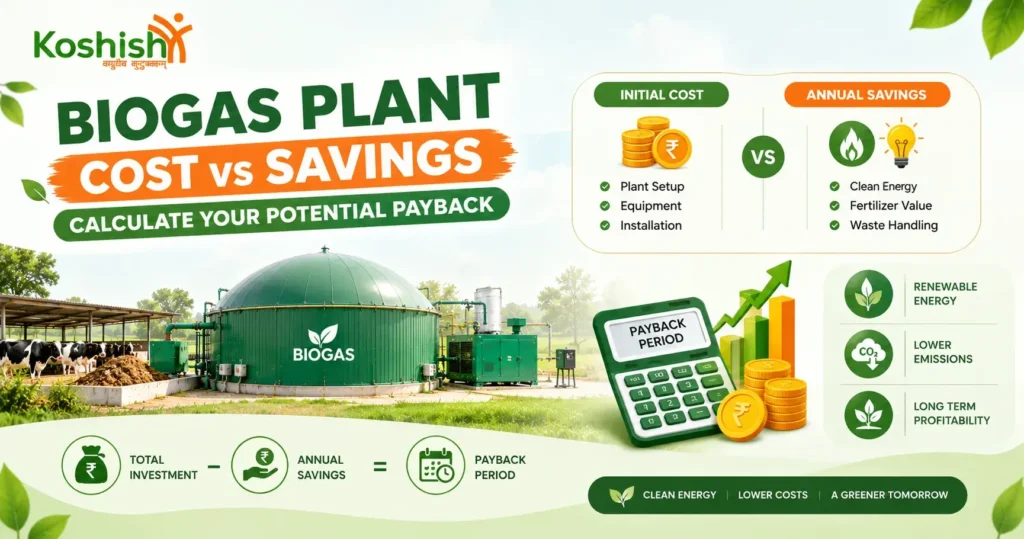
One of the main reasons poultry businesses invest in biogas systems is the strong ROI boost. While the initial installation cost may seem high, the recurring savings help recover the investment over time. Factors that improve ROI include:
- Rising electricity prices
- Increasing diesel costs
- Government renewable energy incentives
- Lower waste management expenses
- Continuous fuel availability from poultry litter
Most commercial poultry farms achieve payback within a few years depending on plant capacity and energy usage. After the payback period, the system continues generating low-cost energy for many years, creating long-term financial stability.
Environmental Benefits of Renewable Energy in Poultry Farms
Apart from economic savings, renewable energy for poultry farms provides important environmental advantages. Biogas systems help:
- Reduce greenhouse gas emissions
- Control odor from poultry waste
- Minimize groundwater contamination
- Lower methane release into the atmosphere
- Support sustainable agriculture practices
Using poultry litter for energy production also creates a circular economy where waste becomes a valuable resource instead of an environmental burden.
Wrapping Up
Biogas technology is transforming modern poultry farming by turning waste into a valuable energy resource. With increasing electricity tariffs and diesel prices, poultry farm energy cost savings have become a top priority for farm owners.
Biogas electricity in poultry farms helps reduce dependence on grid power and diesel generators while improving operational efficiency. From heating poultry sheds to generating electricity, biogas offers multiple applications that significantly lower energy costs.
In addition to poultry farm power savings, biogas systems improve waste management, reduce environmental impact, and provide strong long-term ROI. As renewable energy adoption continues to grow, biogas is becoming one of the most practical and sustainable solutions for the poultry industry.
Frequently Asked Questions (FAQ)
How does biogas help reduce electricity costs in poultry farms?
Biogas systems generate electricity using poultry waste, reducing dependence on grid electricity and lowering monthly power bills.
Can biogas completely replace diesel generators in poultry farms?
In many cases, biogas generators can significantly reduce or partially replace diesel generator usage, depending on plant size and energy demand.
What waste materials are used in poultry biogas plants?
Poultry litter, manure, feed waste, organic residue, and wastewater are commonly used in poultry biogas systems.
Is biogas suitable for small poultry farms?
Yes, small and medium poultry farms can also install biogas systems based on their waste generation and energy requirements.
What are the main benefits of renewable energy in poultry farms?
The main benefits include lower electricity costs, diesel savings, improved waste management, reduced emissions, and better farm sustainability.