
Dairy farms generate a large volume of organic waste daily, due to which dependency on natural resources exceeds the limit. In this scenario, the sustainable power demand increases. Such activities lead to depletion of natural resources and distort cost stability. Rising electricity costs and frequent power fluctuations have made energy management a major concern for dairy farm owners.
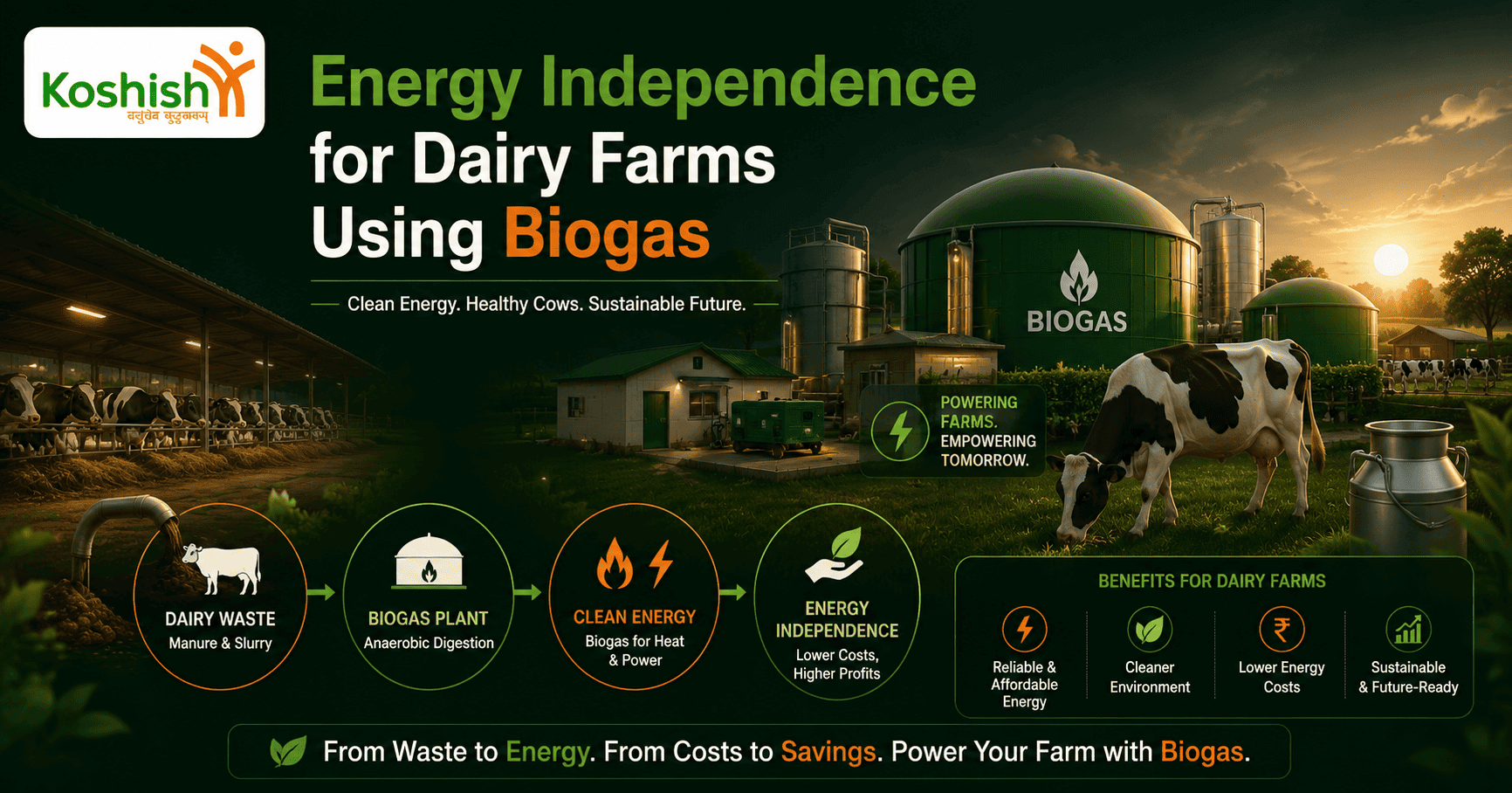
This is where biogas technology is transforming the dairy industry. By converting cow dung and organic waste into renewable energy, dairy farms can achieve greater energy independence, reduce operational costs, and create a sustainable farming ecosystem.

What is Biogas Energy in Dairy Farms?
Biogas is a renewable fuel produced through the anaerobic digestion of organic materials such as cattle manure, slurry, and agricultural waste. In dairy farms, cow dung serves as the primary feedstock for biogas plants. During the digestion process, microorganisms break down the organic material in an oxygen-free environment and release methane-rich gas. This gas can be used for:- Electricity generation
- Heating applications
- Cooking fuel
- Running generators and farm equipment
Power Demand in Dairy Farms
Dairy farms consume significant amounts of electricity daily. Common energy-consuming operations include:- Milk chilling and refrigeration
- Automatic milking systems
- Ventilation and cooling fans
- Water pumping systems
- Lighting for sheds and operations
- Feed mixing and processing equipment
Reducing Grid Dependency with Biogas
One of the biggest advantages of biogas systems is reduced dependence on external electricity supply. Dairy farms can produce their own electricity using biogas-powered generators. Benefits of reduced grid dependency include:- Protection from power cuts
- Lower electricity bills
- Improved operational reliability
- Better control over energy consumption
- Continuous functioning of essential equipment
Cost Stability and Long-Term Savings
Electricity prices continue to rise due to fuel costs and increasing energy demand. Biogas offers dairy farmers greater cost stability because the fuel source, cow dung, is continuously available on the farm itself. Major Financial Benefits- Reduced electricity expenses
- Lower diesel consumption
- Savings on waste disposal
- Reduced fertiliser costs through slurry reuse
- Long-term return on investment
Scalability of Biogas Systems
Biogas plants are highly scalable and can be designed according to the size and energy needs of the dairy farm. Small-Scale Farms: Small farms can install compact digesters for cooking fuel and limited electricity generation. Medium-Scale Dairy Farms: Medium farms can power pumps, lighting systems, and milk cooling units. Large Commercial Dairy Farms: Large-scale farms can establish industrial biogas systems capable of generating significant electricity and even supplying surplus power to nearby operations. This scalability makes biogas suitable for nearly every category of dairy business.Renewable Power for Sustainable Dairy Farming
Biogas is considered a clean and renewable energy source because it utilizes organic waste that would otherwise release methane into the atmosphere. By capturing and using this methane productively, dairy farms reduce greenhouse gas emissions and support sustainable agriculture. Environmental advantages include the following:- Reduced carbon footprint
- Improved manure management
- Lower environmental pollution
- Sustainable waste utilization
- Support for circular economy practices