

Industrial waste management has become a major challenge for businesses across India. Rising disposal costs, stricter environmental norms, and increasing energy prices are pushing industries to adopt sustainable solutions. One of the most effective solutions today is a biogas plant designed specifically for industrial waste treatment and energy recovery.
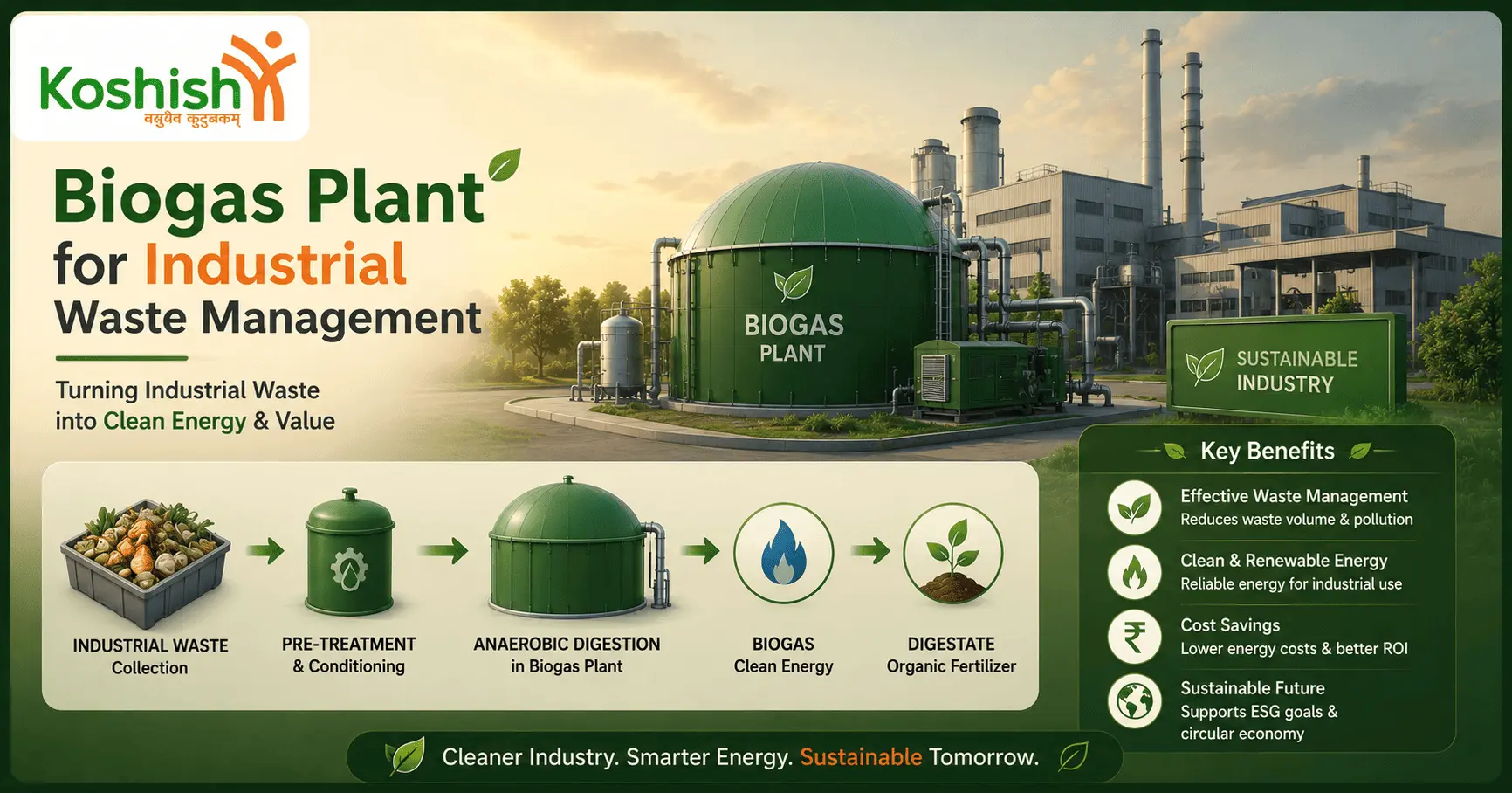
A waste to biogas plant converts organic industrial waste into renewable energy through the process of anaerobic digestion. This technology not only helps industries manage waste efficiently but also reduces operational costs and supports sustainability goals.
What is a Biogas Plant for Industrial Waste?
A biogas plant for industrial waste is a system that processes organic waste materials generated by factories and industrial units. Using microorganisms in an oxygen-free environment, the plant breaks down waste and produces biogas, which mainly contains methane. The generated gas can be used for:- Electricity generation
- Steam production
- Boiler fuel replacement
- Heating applications
- Compressed Bio Gas (CBG) production

Types of Industrial Waste Suitable for Biogas
Not all industrial waste can be processed in a biogas system. However, industries generating organic waste are ideal candidates for anaerobic digestion. Common suitable waste types include: Food Processing Waste: These materials have high biodegradable content, making them excellent for biogas production. Food industries generate large quantities of organic waste, such as:- Fruit and vegetable residues
- Dairy waste
- Sugar waste
- Bakery waste
- Oil and grease
How Anaerobic Digestion Helps Industries
The anaerobic digestion industry is growing rapidly because it solves two major industrial problems simultaneously:- Waste disposal
- Energy generation
- Organic waste is fed into a sealed digester
- Bacteria decompose the waste without oxygen
- Methane-rich biogas is produced
- Residual slurry is separated for fertilizer use
Industry-Wise Applications of Biogas Plants
Food Processing Industry: Food factories use biogas for steam generation and cooking fuel replacement. Large food processing units can significantly reduce LPG and diesel expenses. Distilleries: Distilleries are among the biggest adopters of **industrial waste to energy** systems. Biogas generated from spent wash is often used in boilers to reduce coal consumption. Pharmaceutical Industry: Pharma companies use biogas plants to manage organic sludge while complying with pollution control norms. Dairy Industry: Dairy processing plants generate wastewater and organic residues ideal for methane generation. Many dairies use biogas to power generators and heating systems. Cost vs Savings Analysis: The cost of setting up a biogas plant for industrial waste depends on:- Plant size
- Waste quantity
- Technology used
- Gas utilization system
- Automation level
- Digesters
- Gas storage units
- Waste handling systems
- Power generation equipment
- Reduced electricity bills
- Lower fuel costs
- Reduced waste disposal charges
- Lower environmental penalties
- Revenue from carbon credits and organic fertilizer
Regulatory Compliance in India
India has introduced stricter environmental regulations for industrial waste disposal. Installing a biogas plant helps industries comply with:- Pollution Control Board norms
- Wastewater discharge standards
- ESG and sustainability reporting requirements
- Renewable energy targets