


What Is Poultry Farm Biogas Production?
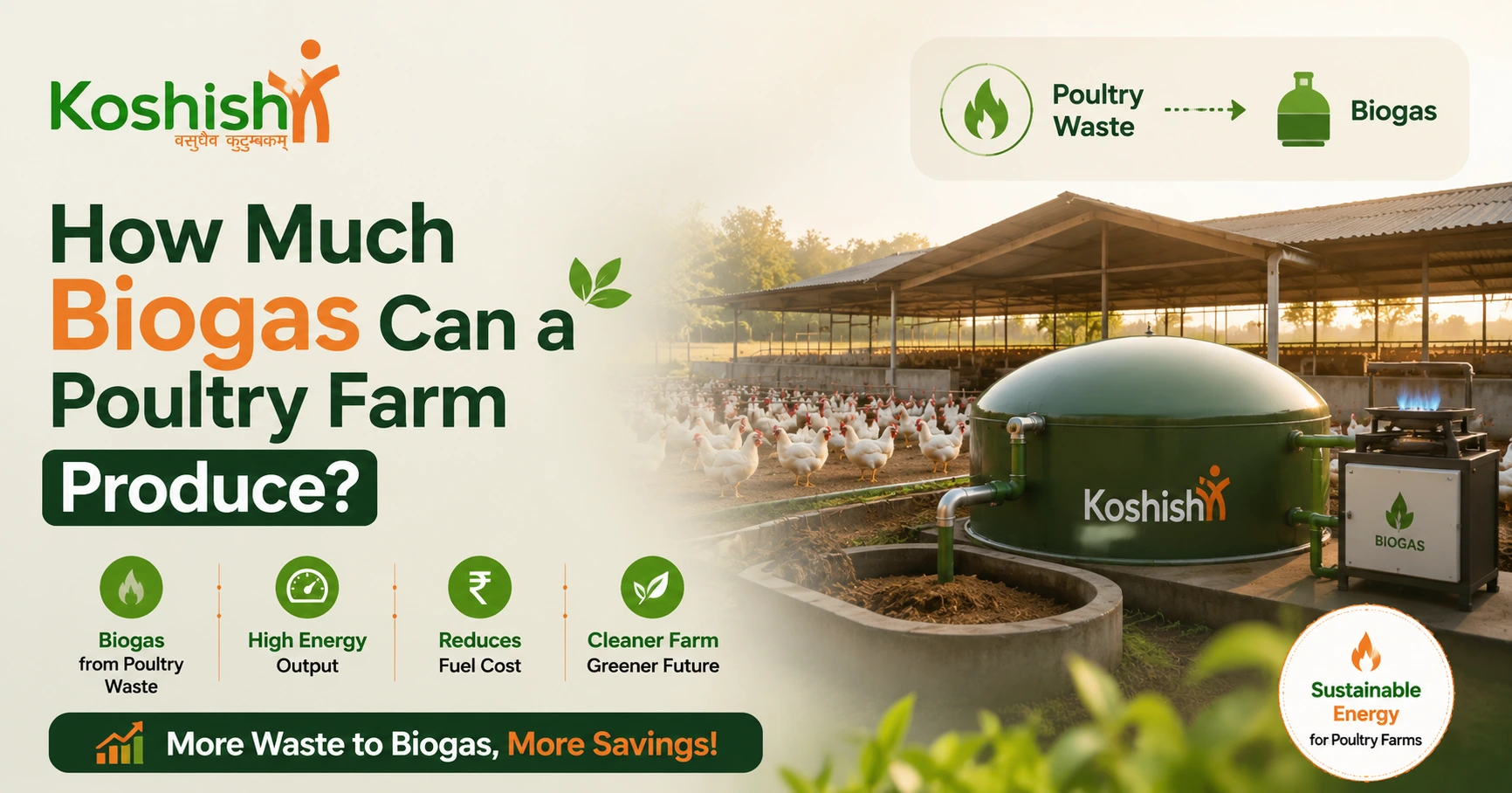
Poultry farm biogas production is the process of turning chicken manure into biogas inside a sealed tank called a biogas digester. First, farmers collect the poultry waste. Then, they mix it with water to make a smooth slurry. After that, they pour the slurry into the digester. Inside the digester, natural bacteria break down the waste without oxygen. During this process, biogas starts to form. As a result, the waste turns into clean biogas that farmers can use for energy. The biogas mainly contains methane. Farmers can use this gas for:- Cooking
- Heating poultry sheds
- Running generators
- Producing electricity
How Is Biogas Produced from Poultry Waste?
The process is simple. First, it follows a few easy steps that anyone can understand. Step 1: Collect Poultry Waste : First, collect fresh chicken manure from the poultry sheds every day. Step 2: Mix with Water: Next, mix the manure with water to form a smooth slurry. Step 3: Feed the Digester: Then, pour the slurry into the biogas digester. Step 4: Anaerobic Digestion: After that, bacteria break down the waste without oxygen. During this process, methane gas forms naturally. Step 5: Collect the Biogas: Finally, collect the biogas and use it for cooking, heating, or electricity generation.How Much Biogas Can a Poultry Farm Produce?
The amount of biogas mainly depends on the number of birds, the amount of manure they produce, and the quality of the waste. Therefore, farms with more birds and better-quality manure usually produce more biogas. On average: One chicken produces about 0.08–0.12 kg of manure per day. One kilogram of fresh poultry manure can produce around 0.05–0.08 cubic meters (m³) of biogas under good operating conditions.How to Calculate Biogas Per Bird
Farmers can use a simple formula. Biogas = Total manure × Biogas yield per kilogram of manure Now, let’s understand this with a simple example. For example, suppose:- 1,000 birds
- Each bird produces 0.1 kg manure daily
- Total manure = 100 kg/day
- Biogas yield = 0.06 m³/kg
Poultry Waste Energy Potential
Chicken manure contains a lot of organic matter that produces methane during digestion. As a result, it has a high poultry waste energy potential. Therefore, it can produce more biogas than many other types of animal waste. The energy produced can help farmers:- Reduce LPG use
- Lower electricity bills
- Heat poultry houses
- Generate electricity
- Power farm equipment
Methane Yield Poultry Waste Can Produce
The methane yield poultry manure produces depends on several factors. Therefore, farmers should understand these factors to get more biogas. These include:- Freshness of manure
- Moisture content
- Digester temperature
- Retention time
- Feeding rate
- Proper mixing
- Digester maintenance
Factors That Affect Poultry Farm Biogas Production
Several factors affect daily biogas production. Therefore, farmers should understand these factors to produce more biogas every day. Number of Birds: More birds produce more manure. Therefore, larger farms usually generate more biogas. Feed Quality: Healthy birds produce manure with better organic content. Digester Temperature: Warm temperatures help bacteria work faster. Moisture Level: The slurry should contain the right amount of water. Otherwise, gas production may decrease. Digester Design: A well-designed digester improves gas production and reduces maintenance problems. Regular Feeding: Adding fresh slurry every day keeps bacteria active and stable.Benefits of Poultry Farm Biogas Production
Yes. Poultry farms produce a large amount of manure every day. However, instead of treating this waste as a problem, farmers can turn it into valuable energy. As a result, they reduce waste, save money, and make better use of farm resources.Tips to Increase Biogas Production
Farmers can improve gas production by following simple practices.- Feed the digester every day.
- Use fresh poultry manure.
- Maintain the correct water ratio.
- Keep the digester warm.
- Remove unwanted materials from the manure.
- Prevent gas leaks.
- Service the plant regularly.
Is Poultry Farm Biogas Production Worth It?
Yes. Poultry farms produce large amounts of manure every day. Instead of treating this waste as a problem, farmers can convert it into valuable energy. Moreover, the biogas plant reduces waste management costs and produces organic fertilizer. As a result, farmers spend less money on waste disposal and chemical fertilizers. Over time, they also save money on fuel and electricity. Therefore, these savings help recover the investment. In the long run, the biogas plant becomes a smart and cost-effective solution for poultry farms. Therefore, poultry farm biogas production is a simple, practical, and sustainable solution for small, medium, and large poultry farms. As a result, farmers can turn waste into clean energy, reduce costs, and keep their farms cleaner and more efficient.Final Thought
Poultry farm biogas production is a simple and effective way to turn chicken waste into clean energy. Instead of throwing the waste away, farmers can use it to produce biogas. As a result, they reduce waste and save money. Moreover, a well-managed biogas plant can produce useful gas every day. However, the amount of gas depends on the number of birds and the quality of the manure. Therefore, proper plant care helps farmers get better results. By understanding biogas per bird, farmers can estimate how much gas their farm can produce. Then, they can improve the poultry waste energy potential and increase the methane yield poultry manure can produce. As a result, they reduce waste, lower energy costs, and make their farms more sustainable. At Koshish India, we design and install reliable poultry farm biogas plants that help farmers convert waste into valuable energy while building a cleaner and more profitable future.Frequently Asked Questions (FAQ)
How much biogas can one chicken produce?
On average, one chicken can indirectly produce about 0.004 to 0.008 m³ of biogas per day. However, the exact amount depends on how much manure the bird produces and its quality.
What is biogas per bird?
Biogas per bird is the estimated amount of biogas that one chicken can produce each day from its manure. Therefore, farmers can use this value to estimate the total biogas their farm can produce.
Can poultry biogas generate electricity?
Yes. Farmers can use poultry biogas to run a generator. As a result, they can produce electricity for lights, fans, and other farm equipment.
What is the methane content in poultry biogas?
Poultry biogas usually contains 50% to 70% methane. Therefore, it is a good source of clean energy for many farm activities.
Does poultry manure make good biogas?
Yes. Poultry manure is rich in organic matter. Because of this, it has high poultry waste energy potential and produces a good amount of biogas.
What can farmers do with the leftover slurry?
After biogas production, farmers can use the leftover slurry as an organic fertilizer. As a result, it adds nutrients to the soil and helps crops grow better.