
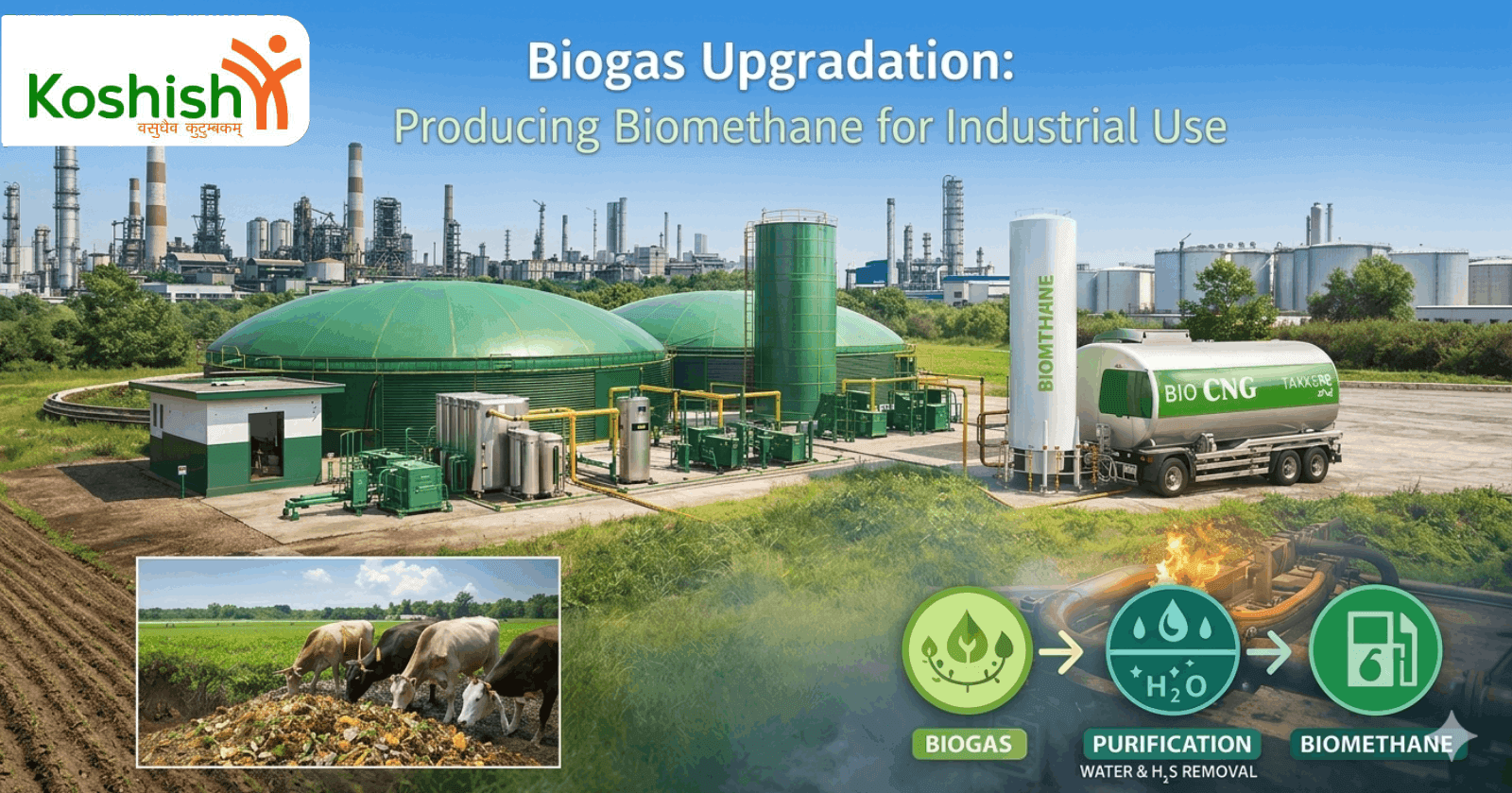
Biogas upgrading to biomethane is growing because industries look for clean and low-cost energy solutions.
Raw biogas is useful, but biogas upgrading to biomethane makes it more useful. It produces high-purity biomethane similar to natural gas.
This upgraded fuel is clean and sustainable. It can be used in boilers, power generation, and transport.
As industries move towards net-zero goals and stricter standards, biomethane becomes a sustainable fuel. It provides both environmental and economic benefits.
Difference between Raw Biogas and Biomethane
The difference between Raw Biogas & Biomethane is as follows:
| Basis Of Distinction | Raw Biogas | Biomethane |
| Methane Content | 45-70% methane it carries | 90% of the methane it carries |
| Primary Impurity | Carbon Dioxide (CO2) | Removed after the Process |
| Purification Level | Unprocessed | It is processed further. Biogas upgrading to biomethane. |
| Usability | Biogas is used for cooking, electricity, & organic manure. | Biomethane is used in place of Petrol & CNG. |
| Storage & Transport | Difficult due to impurities & moisture. | Easily, since it is further processed and compressed. |
| Environmental Impact | Moderate H2S can cause corrosion | Biomethane is cleaner since it does not carry any impurities |
| Suitable For | Small Farms & Rural Setups | Vehicle fuel, City Gas Distribution |
How Biogas Upgradation to Biomethane Works?
At Koshish India, the major role of our biomethane plants is to increase methane concentration and remove harmful gases through step-by-step biogas purification for high-quality output.
- Removal of Moisture & Particulates: Cyclone separators and dryers remove water and dust from biogas.
- H₂S Removal: Iron oxide filters, activated carbon, and biological scrubbers remove harmful hydrogen sulfide gas.
- CO₂ Removal: This is the important step in biogas upgrading to biomethane. It produces renewable natural gas. The final methane concentration reaches up to 98%.
- Compression and Storage: The upgraded gas is compressed into cylinders or sent through pipelines. This process ensures maximum methane recovery and meets industrial fuel standards.
Upgrading Technologies Used in Biogas Purification
Industries choose systems based on cost, efficiency, and gas quality. The main technologies include:
- Water Scrubbing: It removes CO₂ and H₂S by using water absorption. It is commonly used in small and medium biomethane plants.
- Pressure Swing Adsorption (PSA): PSA uses molecular sieves under pressure. It provides high biogas purification efficiency and is perfect for industrial-scale biogas upgrading to biomethane.
- Chemical Scrubbing: It uses amine solutions to absorb CO₂. It is good for continuous operations that need high-purity renewable natural gas.
- Membrane Separation: Membrane separation uses polymer membranes to remove CO₂. It is well efficient and scalable, which makes it suitable for modern biomethane plants.
Applications of Biomethane in Industry
Industries use renewable natural gas for its high energy and clean burning. It is commonly used for:
Industrial Heating
It replaces LPG, diesel, LDO, and furnace oil in:
- Boilers
- Hot air generators
- Steam generation units
Manufacturing and Processing
The cement, textile, steel, pharma, paper, and food industries benefit from biogas upgrading to biomethane. It helps to reduce operating costs.
Mobility Fuel (Bio-CNG)
The plant produces biomethane for storage in cylinders and use as transport-grade CNG.
Power Generation
Pure gas helps generators to run better and requires less maintenance.
Feedstock for Green Hydrogen
Biomethane is a renewable and low-emission fuel for hydrogen production.
Across all these uses, renewable natural gas is reliable, scalable, and sustainable for industrial applications.
Potential for Pipeline Injection
A fast-growing use of biogas upgrading is the direct injection of biomethane into pipelines. Many states and city gas distribution networks promote renewable natural gas supply through:
- CGD grid integration
- Virtual pipelines
- Long-term gas purchase agreements
- Carbon credit opportunities
A high-quality biomethane plant meets grid standards by maintaining steady pressure, high methane purity, and proper dehydration levels.
Pipeline injection supports:
- Energy security
- Rural income generation
- Industrial decarbonization
- Reduced dependence on fossil natural gas
This makes biogas purification and biomethane production a key energy asset for the future.
Wrapping Up
As industries move to clean energy, biogas upgrading to biomethane supports sustainability, reduces costs, and lowers carbon footprint. Well efficient plants convert waste into renewable natural gas for boilers, machines, vehicles, and industrial clusters. With better biogas purification technologies, India can lead in green gas production.
Frequently Asked Questions
Why is biogas upgrading to biomethane important?
Upgrading makes biogas good for industrial use, vehicles, and pipeline injection. It helps industries to save costs and reduce carbon emissions.
How does biogas purification help industries?
Biogas purification enhances generator and engine efficiency, reduces maintenance, and produces renewable natural gas that meets industrial standards.
Why use renewable natural gas?
There are many reasons to use renewable natural gas such as, reducing carbon emissions, providing clean & green energy and helping to manage business operations smoothly.
What are the benefits of a biomethane plant?
Biomethane plants convert organic waste into clean energy, power industries, reduce costs, and support sustainability goals.