
A cow dung biogas plant turns cattle dung into clean and useful energy. Farmers, dairies, gaushalas, and rural businesses can use it to make biogas. They can then use this gas for cooking, heating, or making electricity.
However, it is important to know the cow dung biogas plant cost before starting a project. You should also understand installation costs, subsidies, and other expenses. This guide explains the cow dung biogas plant cost, biogas plant installation, subsidies, and the main factors that affect the total investment.

These figures are only general estimates. The final price can change based on the site, plant technology, civil work, equipment, and gas use.
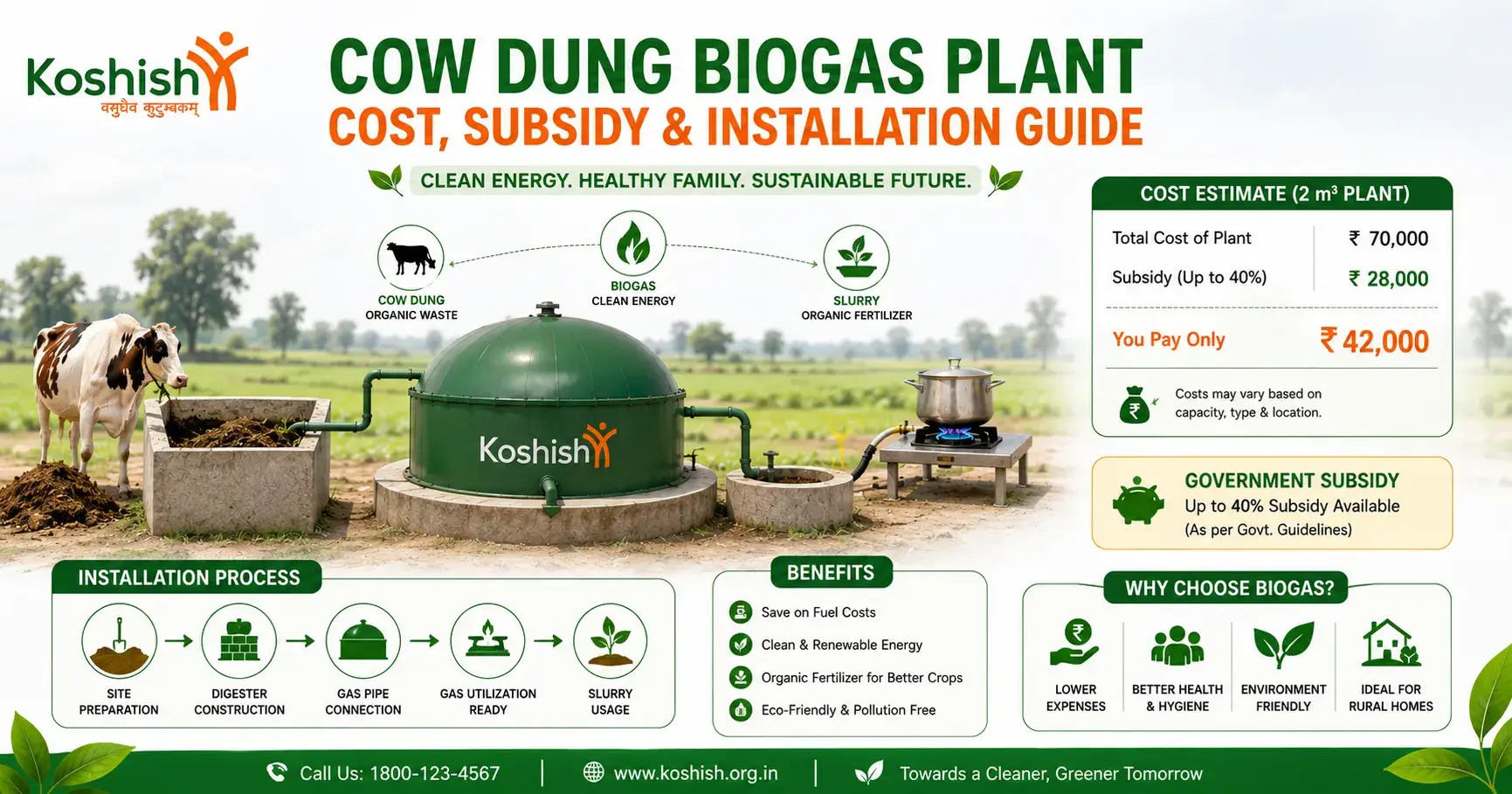
Also, the Ministry of New and Renewable Energy (MNRE) notes that biogas plant costs can vary by plant size and location. Its published FAQ gives an average cost of around ₹17,000 for a 2 m³ plant under the referenced programme framework.
What Is a Cow Dung Biogas Plant?
A cattle dung biogas plant uses a closed tank called a digester. Inside the digester, bacteria break down cow dung without oxygen. This process produces biogas. You can use the biogas for:- Cooking
- Heating
- Electricity generation
- Farm activities
- Bio-CNG or CBG production
Cow Dung Biogas Plant Cost in India
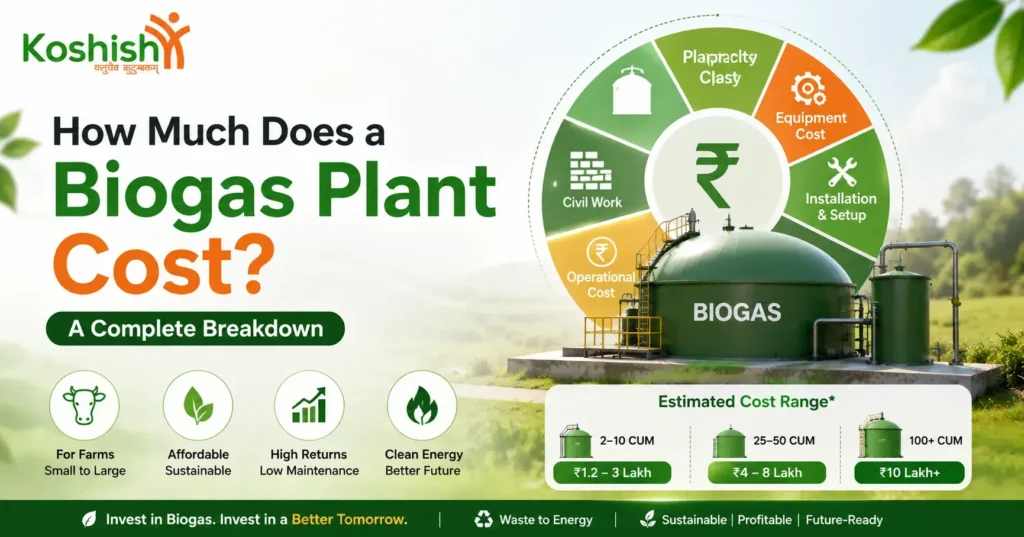
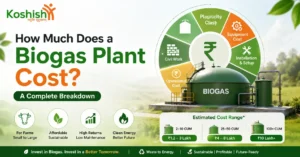
The cow dung biogas plant cost in India depends on the plant size, design, location, materials, and use of the gas. For example, a small household plant costs much less than a large commercial plant.| Cubic Meter Biogas Plant | Biogas Plant Installation Cost |
| 4-6 cubic meters | 40,000-1 lakh |
| 10-25 cubic meters | 1 lakh to 5 lakh |
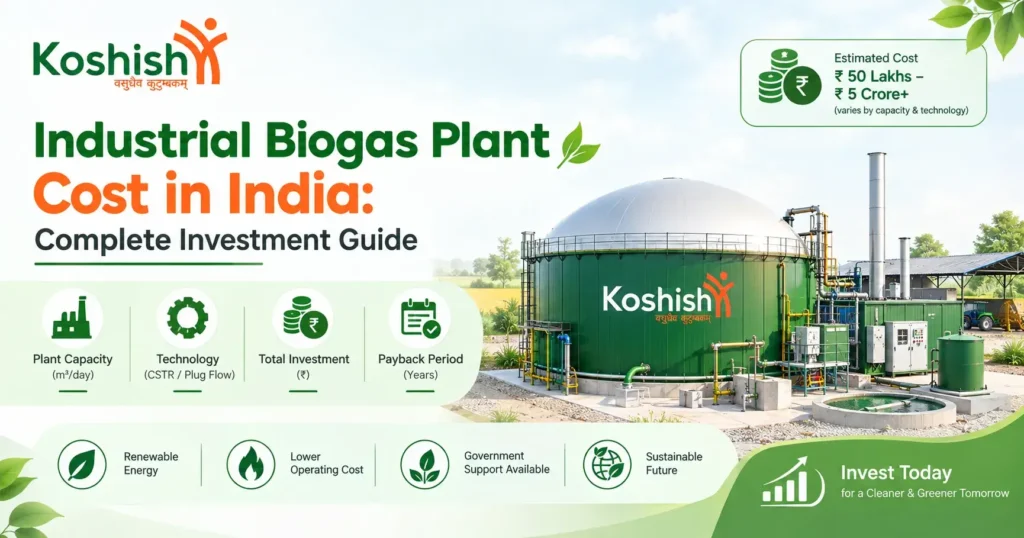
| Commercial Biogas Plant | 10 lakh to 5 Crore and above |
What Affects the Cow Dung Biogas Plant Price?
Several factors can change the cow dung biogas plant price. Therefore, you should consider each one before preparing your budget. Plant Capacity: A bigger plant needs a larger digester and more equipment. As a result, the total cost increases. Digester Design: Different digester designs have different costs. For example, fixed-dome, floating-drum, and prefabricated plants may have different prices. Civil Work: Civil work is another major cost. It can include digging, foundations, digester construction, slurry pits, and other site work. Gas Storage: The plant needs enough gas storage for daily use. Therefore, higher gas demand may require a larger storage system. Gas Usage: The cost also depends on how you plan to use the gas. Cooking systems are usually simpler. On the other hand, electricity generation needs engines, generators, and other equipment. Site Conditions: The site can also affect the final cost. Transport, water supply, land preparation, and local labour costs may increase the budget. Installation and Testing: Finally, installation, testing, and commissioning add to the project cost. Proper installation also helps the plant work safely and efficiently.Cow Dung Subsidy: How Much Financial Help Is Available?
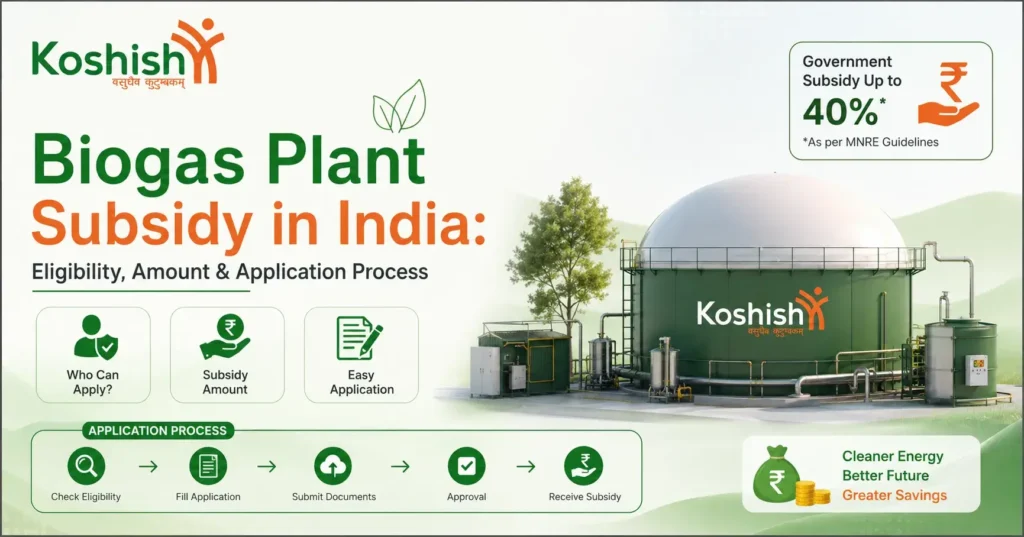
Government support can reduce the initial cost for eligible users. Under the MNRE Biogas Programme, small plants from 1 to 25 m³ per day can receive Central Financial Assistance (CFA). The amount depends on plant size and beneficiary category. For general states and categories, the published CFA ranges from ₹9,800 for a 1 m³ plant to ₹52,800 for a 20–25 m³ plant. Some hilly and North-Eastern states, island areas, and SC/ST beneficiaries may receive higher support. Moreover, an additional ₹1,600 CFA may apply when an eligible plant includes a sanitary toilet or an approved biogas slurry filter unit. For plants above 25 m³ per day, the subsidy structure is different. It may depend on the plant’s use, such as power generation or thermal applications. Important: Subsidy rules can change. Eligibility and support also depend on the government programme and available funds. Therefore, always check the latest MNRE rules before planning your project.Cow Dung Biogas Plant Installation Process
A typical cow dung biogas plant installation follows a few simple steps.- First, check the amount of cow dung available each day.
- Next, choose the right plant capacity.
- Check the site and water availability.
- Design the digester and feeding system.
- Complete the civil work or install a prefabricated plant.
- Install gas pipes, storage, and safety equipment.
- Connect the gas to the required system.
- Test and commission the plant.
- Finally, train users to operate and maintain the plant.
Is a Cattle Dung Biogas Plant Worth the Investment?
A cattle dung biogas plant can be a good investment for farmers, dairies, and gaushalas with a steady supply of cow dung. First, it helps turn waste into renewable energy. It can also reduce the use of conventional fuels. At the same time, the plant produces slurry that can be used as organic manure. However, choosing the right plant size is very important. Before investing, check your daily cow dung supply, energy needs, expected biogas production, installation cost, subsidy eligibility, and possible savings. This will help you choose a plant that fits your needs and budget.Key Takeaways
- The cow dung biogas plant cost depends on size, design, location, and site conditions.
- Small gobar gas plants usually cost less than commercial plants.
- Eligible users may receive a cow dung subsidy under applicable MNRE programs.
- Biogas can be used for cooking, heating, and electricity generation.
- Larger plants can also support CBG or Bio-CNG production.
- The leftover slurry can be used as organic manure.
- Finally, get a detailed project quotation before making your investment.