
The need for sustainable energy and proper waste management practices among poultry producers is well-known and has been sought for quite a long period of time now. As far as the construction of pig manure biogas plants is concerned, one needs to follow a certain checklist. Release large amounts of organic waste daily, and if it is not managed properly, severe consequences will result, including increased pollution, odour issues, and health hazards. The utilisation of pig waste for the production of renewable energy provides a viable option for husbandry.
Nowadays, it has become obvious that a switch to the use of a properly designed piggery biogas plant, based on an anaerobic digestion process, is required. A properly designed commercial biogas plant allows the reduction of carbon emissions on a daily basis and contributes to the further development of renewable energy pig farms.
What is Pig Manure Biogas?
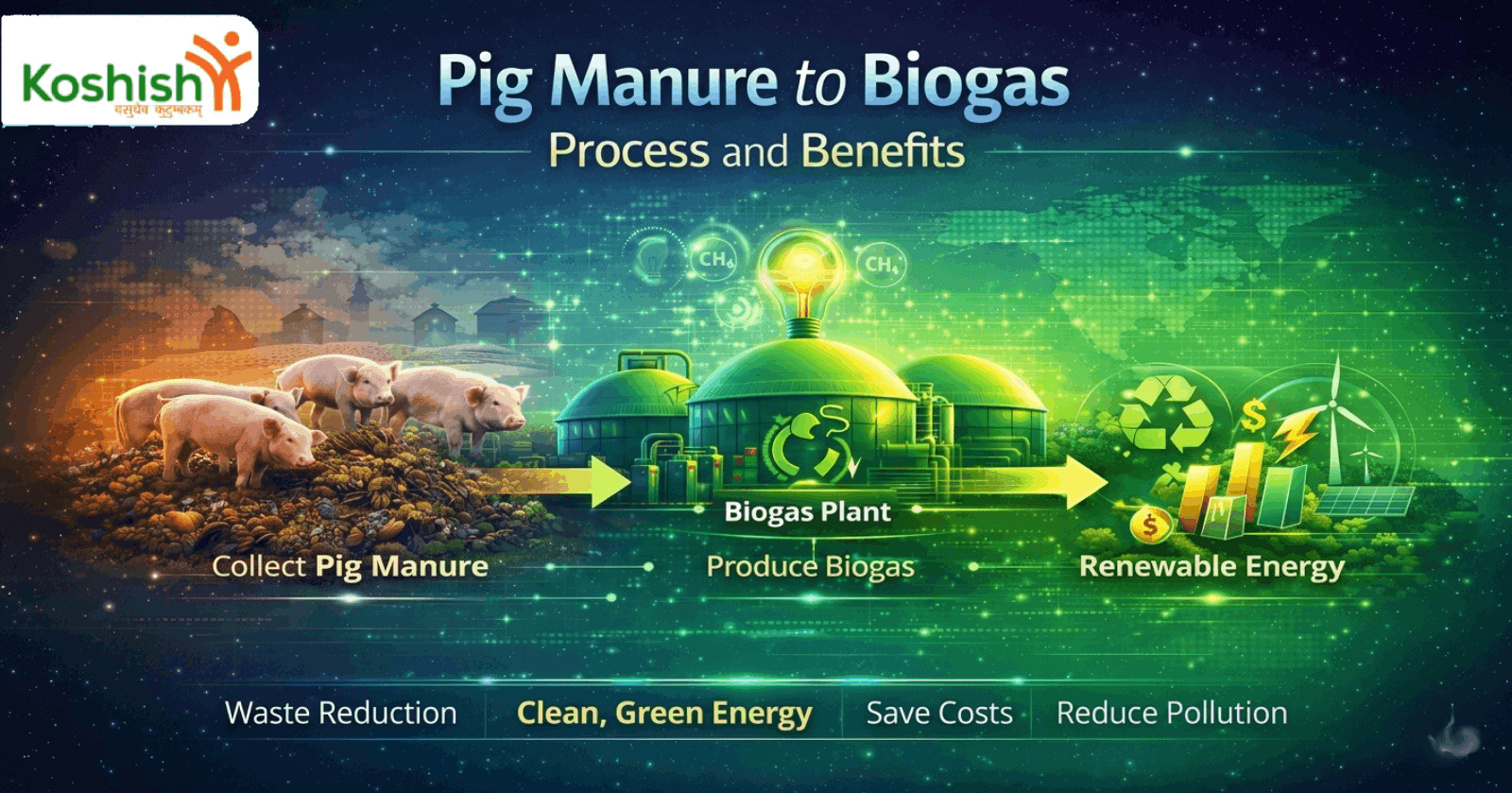
Pig manure biogas is a renewable fuel produced when pig waste decomposes in an oxygen-free environment. This process is called anaerobic digestion. During decomposition, microorganisms break down organic matter and release methane-rich biogas.
The biogas produced from pig manure typically contains:
- 90-95% methane
- 5% carbon dioxide
- Small amounts of hydrogen sulphide and moisture
Methane is the main energy component, making biogas suitable for cooking, heating, electricity generation, and even vehicle fuel after purification. The leftover material after digestion, called digestate or slurry, can be used as a nutrient-rich organic fertiliser.
Pig Manure Anaerobic Digestion Process
The pig manure biogas anaerobic digestion process involves several stages that convert organic waste into usable energy.
Collection of Pig Manure : Pig manure is collected from pig sheds through drainage channels or flushing systems. The waste may contain:
- Pig dung
- Urine
- Wash water
- Leftover feed
The collected slurry is then transported to the digester tank.
Pre-Treatment : Before entering the digester, the manure may undergo basic treatment such as the following:
- Removal of stones or plastic
- Mix with water for uniform consistency
- Temperature adjustment if required
- Proper pre-treatment improves digestion efficiency and biogas production.
Anaerobic Digestion : Inside the airtight digester, microorganisms break down organic matter in the absence of oxygen. This biological process generally occurs in four stages:
- Hydrolysis
- Acidogenesis
- Acetogenesis
- Methanogenesis
During methanogenesis, methane-producing bacteria generate biogas. The digestion process usually takes 20-40 days, depending on temperature, feedstock quality, and digester design.
Biogas Collection : The generated gas is collected in the upper portion of the digester and is stored in gas holders or storage tanks. This pig waste-to-energy conversion system allows farms to use the produced gas for the following:
- Cooking fuel
- Water heating
- Electricity generation
- Boiler operations
- Farm machinery in upgraded biomethane systems
Slurry Removal :After digestion, the remaining slurry exits the digester. This digestate contains valuable nutrients such as the following:
- Nitrogen
- Phosphorus
- Potassium
- Organic carbon
Yield from Pig Manure Biogas
Pig manure has high moisture and organic content, making it suitable for biogas production. On average:
- One pig can produce 2-4 kg of manure daily
- 1 kg of pig manure can generate approximately 0.03–0.06 cubic meters of biogas
The actual yield depends on:
- Feed quality
- Pig breed
- Digester temperature
- Retention time
- Solid concentration
Large-scale piggery biogas plant systems can produce enough gas to meet the primary energy needs of commercial pig farms.
Pig Manure Biogas Energy Applications
There is a huge advantage for poultry farmers: pig waste-to-energy has a wide range of applications.
Cooking Gas and Heating: Pig manure Biogas can replace LPG or firewood for cooking and water heating. This reduces fuel expenses and indoor air pollution.
Electricity Generation: Biogas generators convert methane into electricity, helping farms reduce dependence on grid power.
Organic Manure: After biomethanation, the leftover poultry waste can be used as biofertiliser for crops, and farmers can sell it at market price.
Biofuel: Pig Manure Biogas is further processed into CBG, the best alternative to CNG and other fuels.
Benefits of Pig Manure Biogas Systems
There are various benefits of pig manure biogas systems, which are as follows:
Waste Management Solution: A piggery biogas plant effectively manages large quantities of pig waste, reducing environmental contamination and odour problems.
Renewable Energy Production: Pig manure biogas provides a continuous, renewable source of clean energy, reducing reliance on fossil fuels.
Lower Greenhouse Gas Emissions: Methane released from untreated manure contributes significantly to climate change. Anaerobic digestion captures methane and converts it into useful energy.
Reduced Energy Costs: Farmers can save money on cooking gas, electricity, and heating fuel by using on-site biogas.
Organic Fertiliser Production: The digestate from pig manure biogas anaerobic digestion is rich in nutrients and naturally improves soil fertility.
Improved Farm Hygiene: Proper waste handling improves cleanliness and reduces fly and insect problems on pig farms.
Additional Income Opportunities: Farmers can sell surplus electricity, biomethane, or organic fertiliser for additional revenue.
Slurry Utilisation in Agriculture
The slurry can be utilised in various ways, which can be advantageous to the poultry farmers:
- Improves soil structure
- Enhances microbial activity
- Increases crop productivity
- Reduces chemical fertiliser usage
- Improves water retention in soil
The slurry can be used in:
- Crop farming
- Vegetable cultivation
- Fruit orchards
- Organic agriculture
Many renewable energy pig farms combine biogas production with sustainable farming practices for better long-term profitability.
Challenges in the Production of Pig Manure Biogas
Although the benefits are significant, some challenges include:
- High initial installation cost
- Requirement for technical maintenance
- Proper slurry management
- Skilled operation for large plants
However, government subsidies and renewable energy incentives are making piggery biogas plant projects more financially attractive.
Wrapping Up
The conversion of pig manure into renewable energy is an innovative and sustainable solution for modern livestock farming. Through anaerobic digestion of pig manure, farms can efficiently manage waste while producing clean energy and valuable organic fertilizer.
A properly designed piggery biogas plant supports environmentally friendly farming, reduces operational costs, and promotes the growth of renewable energy pig farms. As the demand for sustainable agriculture and clean energy continues to rise, pig manure biogas technology will play a major role in the future of waste-to-energy solutions.
Frequently Asked Questions (FAQ)
How does pig manure contribute to agriculture?
The manure produced by pigs yields the highest amount of methane and thus is ideal for pig manure biogas production on a large scale because it is affordable, offering cooking gas and fuel. It can, therefore, serve as the best substitute for manure.
Why is the utilisation of pig manure biogas considered environmentally friendly?
First, pig manure biogas production greatly helps in cutting back on greenhouse gas emissions since the methane captured during the process would otherwise have been emitted into the environment. Moreover, this helps to reduce water pollution risks in the ecosystem.
Can pig manure biogas systems be integrated with existing farm operations?
Yes, pig manure biogas systems can be seamlessly integrated into existing farm operations. They can be designed to handle the farm’s specific waste output, enabling efficient waste management while generating renewable energy.
Can pig manure biogas plants be installed on farms?
Yes, pig manure biogas systems can be easily integrated into farm operations since they can be customised according to the waste generation capacity of the farm. Thus, they will not only help manage waste but also generate energy.
What are the financial gains of biogas production for pig farmers?
Pig biogas systems could offer substantial financial gain for farmers because, apart from helping save on energy costs, they create additional income sources through sales of organic fertiliser or extra energy generated.