
Poultry waste disposal methods are important because poultry farms produce a large amount of waste every day. If this waste is not managed properly, it can create bad smells, spread diseases, attract flies, and pollute the environment. As a result, these problems can affect both the farm and the surrounding area.
However, the right poultry waste disposal methods can help solve these issues. In addition, it can turn poultry waste into useful products like organic fertilizer or clean energy.
 Therefore, farmers can keep their farms cleaner while also reducing waste. In this guide, we will compare composting, biogas, and incineration. This way, you can easily choose the best method for your poultry farm.
If your budget is small, composting is a good choice. However, if you want energy and fertilizer, biogas is a better option.
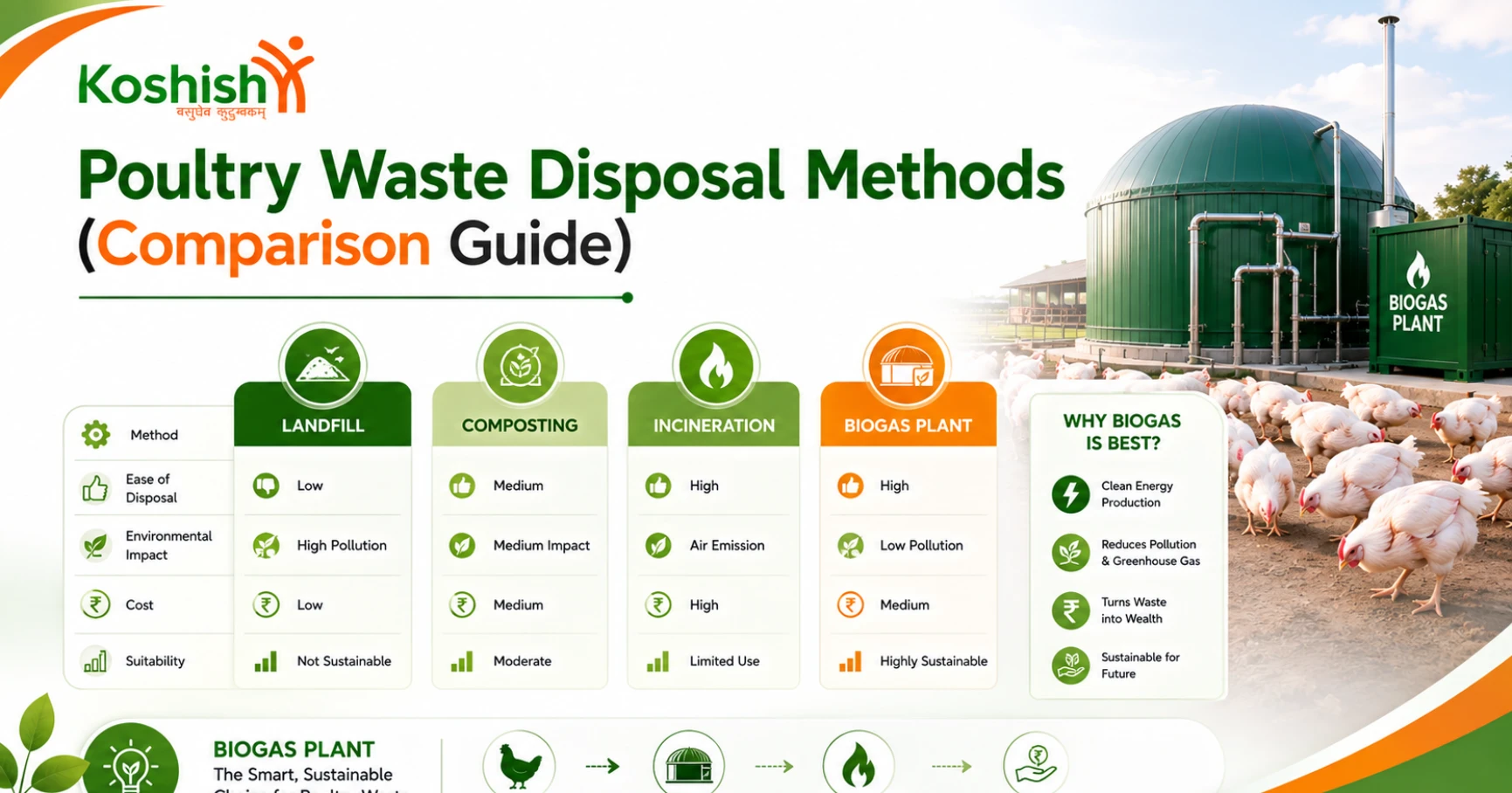
Composting costs the least. Biogas costs more at the beginning but can save money later. Incineration is usually the most expensive option.
Therefore, farmers can keep their farms cleaner while also reducing waste. In this guide, we will compare composting, biogas, and incineration. This way, you can easily choose the best method for your poultry farm.
Why Is Poultry Waste Disposal Methods Important?
Poultry farms produce manure, feathers, bedding material, and leftover feed every day. If this waste is left in the open, it creates many problems. Some common problems are:- First, a bad smell around the farm
- Then, flies and insects
- After that, water and soil pollution
- Next, harmful bacteria and diseases
- Lastly, loss of nutrients in the manure
Common Poultry Waste Disposal Methods
There are many waste management techniques, but the three most common methods are composting, biogas, and incineration. Composting Composting is a natural way to break down poultry manure. Farmers mix manure with dry leaves, straw, or sawdust. Tiny organisms slowly change the waste into compost. Benefits are as follows:- First, low cost
- Second, easy to do
- Third, makes organic fertiliser
- Lastly, good for small farms
- First, takes several weeks
- Second, needs regular mixing
- Lastly, it can smell if not managed well
- First, it produces clean energy
- Second, reduces bad smell
- Third, makes organic fertiliser
- Fourth, helps reduce pollution
- Lastly, saves money over time
- First, higher starting cost
- And, it needs regular maintenance
- First, removes waste quickly
- Then, kills harmful germs
- Lastly, needs less storage space
- First, high cost
- Then, it can cause air pollution
- Lastly, does not make fertiliser
Composting vs Biogas Poultry
Many farmers compare composting vs biogas poultry before choosing a system.| Feature | Composting | Biogas |
| Starting Cost | Low | Higher |
| Running Cost | Low | Medium |
| Makes Energy | No | Yes |
| Makes Fertiliser | Yes | Yes |
| Control Smells | Good | Very Good |
| Best For | Small Farms | Medium & large farms |
Cost Comparison
The cost of each method is different.| Method | Setup Cost | Running Cost |
| Composting | Low | Low |
| Biogas | Medium to high | Medium |
| Incirnation | High | High |
Environmental Impact
Each method affects the environment in a different way. Composting: Composting reduces waste and improves soil. However, it may create a bad smell if not managed properly. Biogas: Biogas is one of the best waste management techniques because it reduces pollution and produces clean energy. Incineration: Incineration removes waste quickly. However, it can create air pollution if the smoke is not controlled.Which Method Is Best for Indian Poultry Farms?
The best method depends on the size of your farm.- First, small farms can choose composting because it is simple and affordable.
- Then, medium and large farms can choose biogas because it gives clean energy and fertiliser.
- Lastly, incineration is best for dead birds or infected waste.
Tips for Better Poultry Manure Disposal
You can improve your poultry manure disposal by following these simple tips:- First, remove waste every day.
- Then, keep the waste dry.
- After that, store manure away from water sources.
- Moreover, clean the waste area regularly.
- Next, choose the right disposal method for your farm size.
- Lastly, maintain your compost pit or biogas plant properly.