
What is Poultry Waste to CBG?
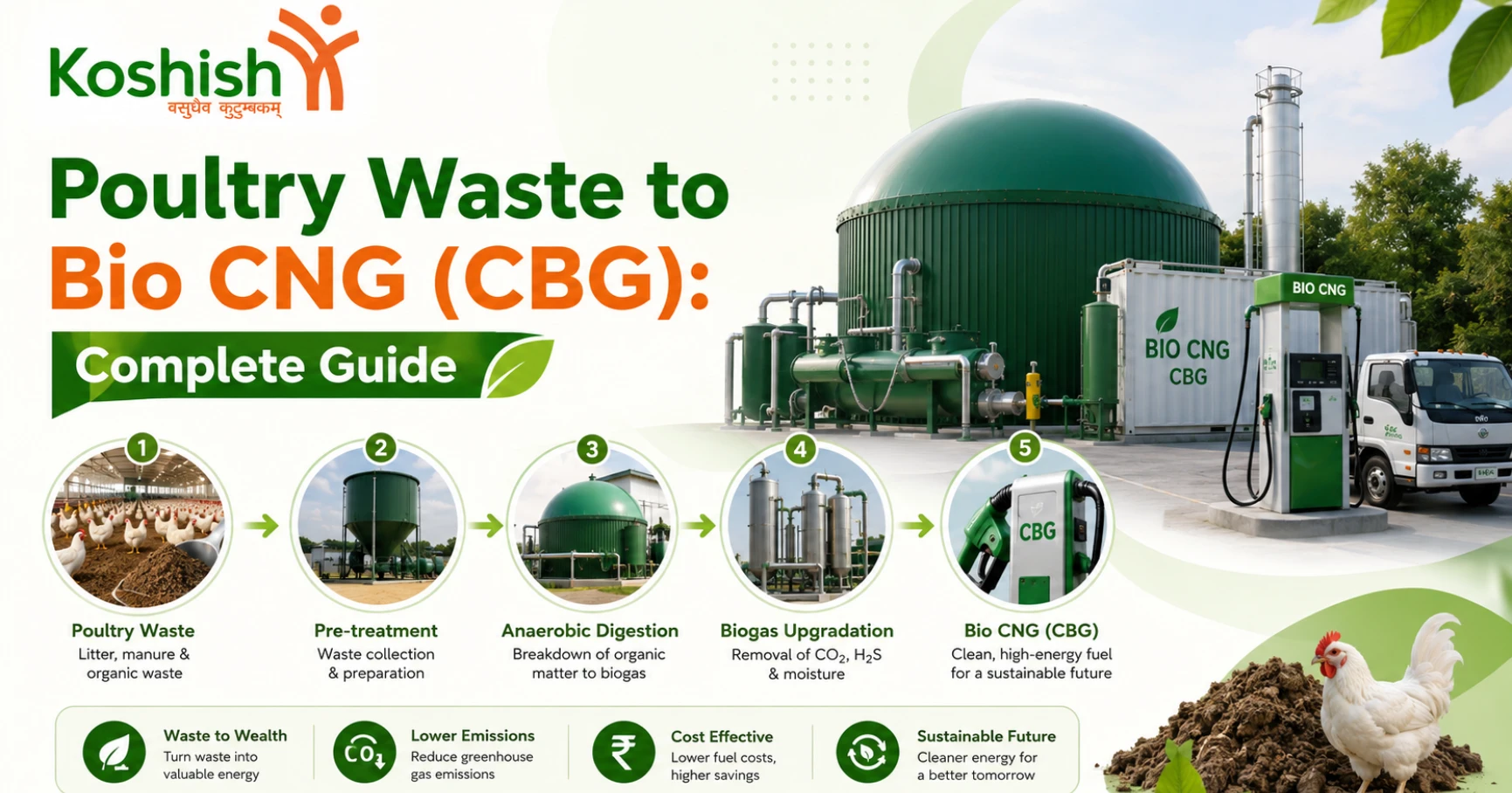
Poultry waste to CBG is the process of converting poultry litter, manure, feathers, and other organic waste into Compressed Biogas (CBG). First, microorganisms break down the waste without oxygen inside a biogas digester. Then, the produced biogas is purified to remove carbon dioxide, hydrogen sulfide, moisture, and other impurities. Finally, the purified methane is compressed into CBG. Since CBG contains a high percentage of methane, it works like natural gas. Therefore, people can use it as fuel for vehicles, industries, commercial kitchens, and power generation.How does the production of compressed biogas from poultry litter work?
The production of poultry waste to CBG gas involves many steps. The procedure is simple but lengthy and time-consuming:- First, the poultry farmers collect the poultry litter on the farm in one place. Just like a pyramid.
- Next, the water mixes with the poultry litter in a 1:1 ratio to make a slurry of it. Then it remains in the digester for 45 days. As a result, the microorganisms work better.
- The anaerobic digestion process takes place, where the microorganisms break down the organic material, and after 45 days, production of methane gas and carbon dioxide is complete.
- Further, the removal of extra moisture and other gases is done from the biogas. The remaining methane content is 95% to 98%.
- Finally, the purified biomethane is compressed under high pressure to produce CBG. After compression, it is ready for transportation and commercial use.
Benefits of Poultry Waste to CBG Gas
There are several advantages to the conversion of poultry waste to CBG gas. We have discussed it below:- First, it provides better poultry waste treatment.
- Then, it produces renewable energy fuel, reducing the costs of fossil fuels.
- Reduces GHG emissions and lowers environmental impacts.
- Also, it controls the bad odour.
- Produces Organic fertiliser from the remaining slurry
Wrapping Up
The increase in poultry waste every day. However, poultry waste is not a challenge anymore and has become an environmental problem. Instead of treating it as a problem, India adopts a sustainable solution. Compressed biogas, converting poultry waste to CBG gas, reduces dependency on fossil fuels and natural gas. The government of India initiates many schemes, such as the SATAT scheme, to support renewable and sustainable energy. As India moves toward cleaner energy, poultry waste-to-CBG offers a practical and sustainable solution for both waste management and renewable fuel production.Frequently Asked Questions
What is poultry waste to CBG?
Poultry waste to CBG is the process of converting poultry litter and manure into compressed biogas through anaerobic digestion, purification, and compression.
Can chicken waste produce Bio-CNG?
Yes. Chicken waste contains organic material that can generate biogas. After purification and compression, the gas becomes Bio-CNG.
Why is upgrading biogas from poultry necessary?
Upgrading removes carbon dioxide, hydrogen sulfide, moisture, and other impurities. As a result, methane purity increases, making the gas suitable for commercial use.
What are SATAT poultry projects?
SATAT poultry projects support the production of compressed biogas from poultry waste. They encourage investment and help create a reliable market for Bio-CNG.
What are the main benefits of compressed biogas from poultry?
It helps manage poultry waste, reduces pollution, produces clean fuel, creates organic fertilizer, lowers greenhouse gas emissions, and provides additional income for poultry farm owners.