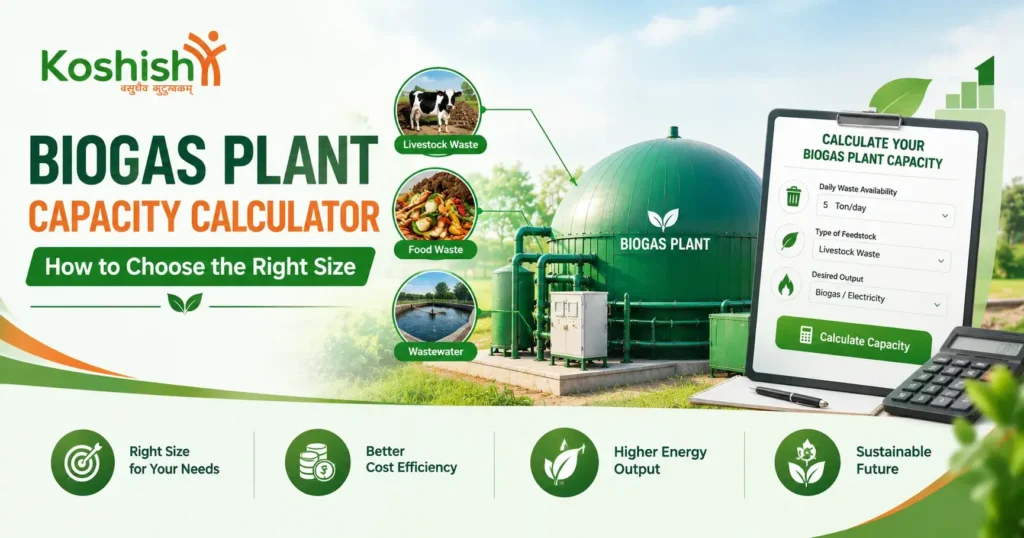

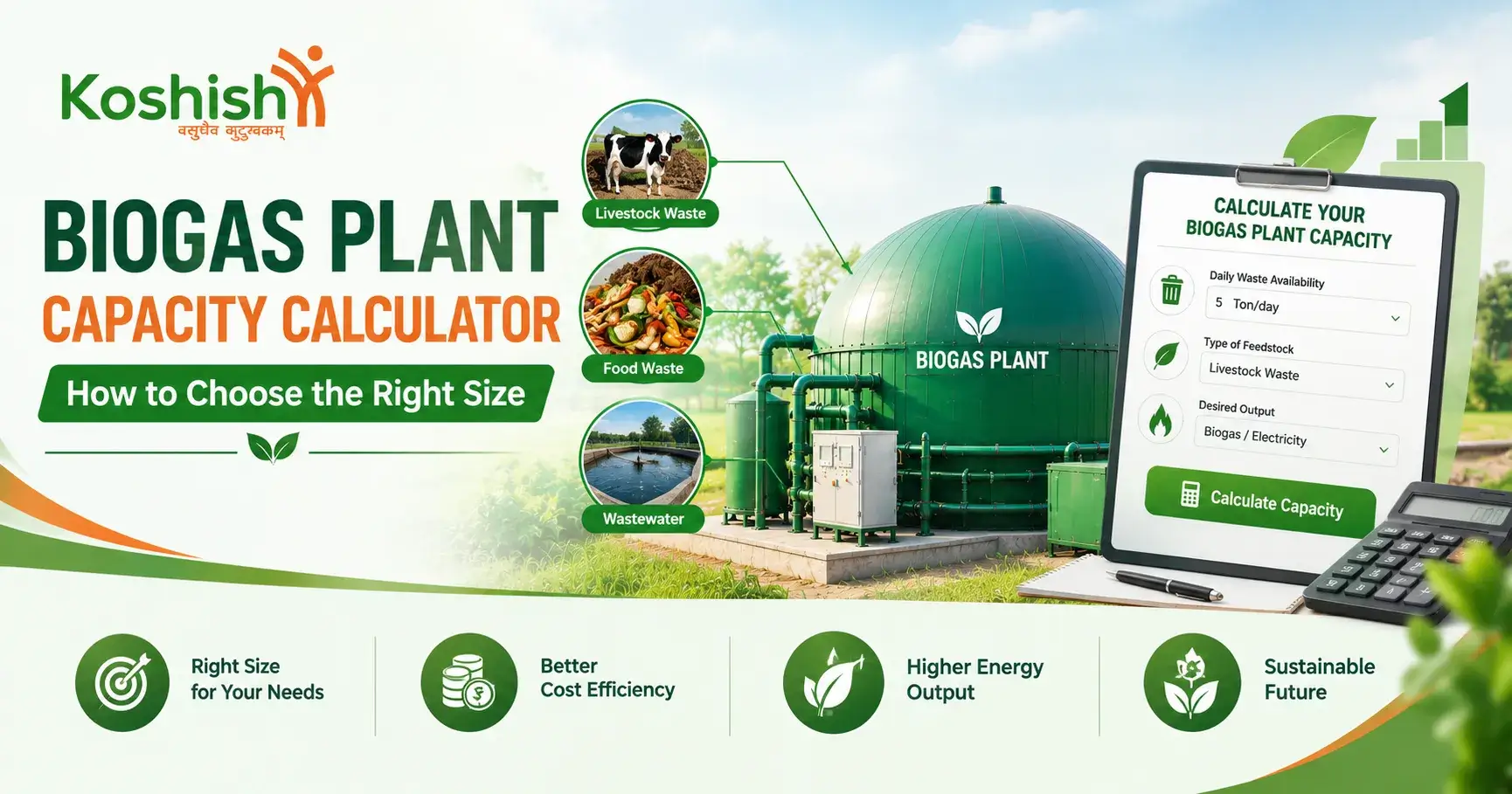
Any waste material is processed into energy in the Biogas Plant, which is then further converted into power, cooking gas, and fuel. But selecting the proper capacity of the biogas plant is also vital. An improper choice of size can affect production and also add to your biogas plant cost. Thus, you need to choose the right Biogas plant capacity for your own requirements. An appropriate biogas plant capacity will help you to control waste, produce energy, and be future-ready.
In this article, we will learn about how you can decide the correct capacity of the biogas plant, estimate waste requirements, and plan your investment. The biogas plant capacity is the processing ability of the plant in terms of the quantity of waste and gas produced. It depends on the kind of waste material, its availability daily and the energy requirements of the user. For instance, a dairy farm may make use of cow dung for producing energy. It depends on the type of waste, daily supply, and energy needs. For example, a dairy farm may use cow dung to produce gas for heating or electricity. Similarly, a food factory can use leftover food to generate energy. Therefore, you should check your daily waste supply before selecting a plant.
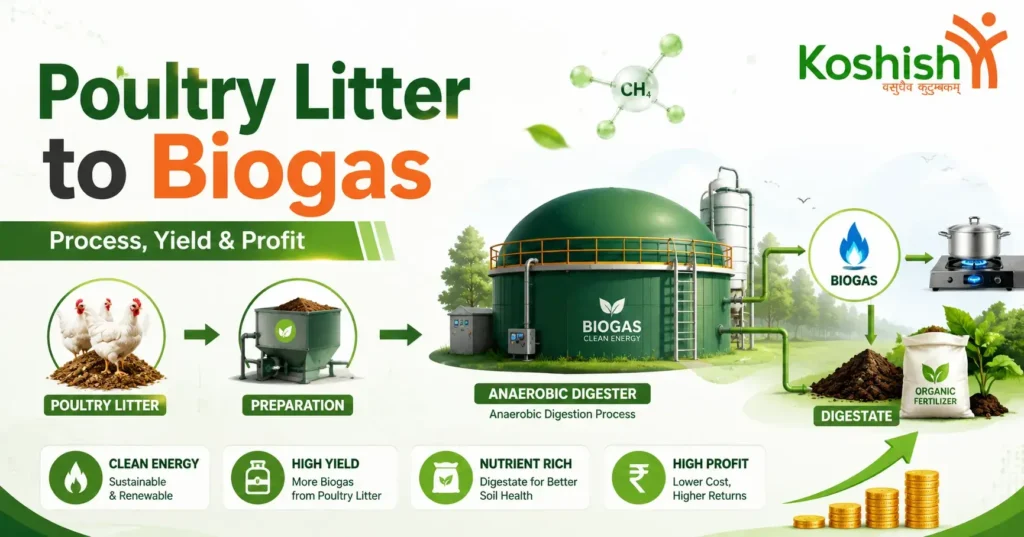
Also Read: Poultry Biogas Plant Cost, Capacity & ROI
5 Factors to Consider When Choosing Biogas Plant Capacity
The 5 factors that you should consider before choosing biogas plant capacity are as follows:
Check Your Daily Waste Supply: First, check how much waste you produce every day. This step helps you select a suitable biogas plant size. However, a large dairy farm may need a bigger system. Also, consider whether your waste supply stays steady throughout the year.
Calculate the Dung Requirement: Dung requirement will depend upon your plant size and daily gas demand. Fresh cattle dung is widely used as raw material in biogas plants. As an example, one kilogram of fresh cattle dung can yield approximately 0.05 cubic meter of biogas. But actual production will vary based upon the quality and moisture content of dung and the operating conditions of the plant.
Understand the Total Waste Requirement: The amount of waste you need will be based on the type of raw material and the energy output that you need to achieve. For instance, the amount of gas output from one factory using food waste will be different from another plant using cow dung. Some forms of waste require sorting before use. Therefore, it is important to ascertain the amount of waste that is available daily.
Match Gas Output With Your Needs: Next, estimate how much biogas you need each day.
- For Cooking: Calculate the daily fuel that is required to cook.
- For electricity: Check the power required for the operation of all equipment.
- For industrial use: Estimate the energy required for daily operations.
- For Bio-CNG: Assess the feedstock supply and gas upgrading requirements.
As a result, you can select a biogas plant capacity that matches your actual energy demand.
Set Your Budget and Available Space: A larger biogas plant usually needs more space, equipment, and investment. Moreover, it may require biogas plant maintenance costs. Therefore, compare the biogas plant installation cost with the expected energy savings. Also, check the space available for the digester, waste storage, and slurry handling. Finally, choose a plant that meets your needs without putting extra pressure on your budget.
How to Estimate the Right Biogas Plant Size
Before installing the biogas plant, you must know the right biogas plant size for it. Follow these simple steps:
- First, measure the daily waste supply that is being produced.
- Then, identify the type of waste you will have.
- After that, keep an estimate of overall usage of electricity and cooking gas demand.
- Next, check the expected gas output from your feedstock.
- Lastly, consult an expert to calculate the required digester volume.
Remember, gas production and digester volume are not the same. The plant also needs enough time to break down waste and produce gas. Therefore, a professional assessment can help you choose the right biogas plant capacity.
Also Read: Common Problems in Biogas Plants and Solutions
Common Mistakes to Avoid While Choosing Biogas Plant Size
Choosing a plant without checking your waste supply can cause problems. Similarly, ignoring future growth may limit your energy production. Instead, plan carefully and seek guidance if stuck in the middle of the procedure. Kindly avoid these common mistakes:
- First, buying a biogas plant that is too large or too small.
- Then, using estimated waste figures without measuring them.
- After that, ignore seasonal changes in waste supply.
- Next, forgetting water, space, and maintenance needs.
- Lastly, stop expecting the same gas output from every type of waste.
Choosing the right biogas plant capacity helps you turn waste into useful energy. First, check your daily waste supply. Next, calculate your energy needs and available budget. Then, select a plant that matches your goals. With proper planning, a biogas plant can help reduce waste, lower fuel costs, and support a more sustainable future.
Frequently Asked Questions (FAQ)
How much is the dung requirement for a biogas plant?
The dung requirement depends on the plant’s size and expected gas output. Fresh cow dung is often used because it contains organic matter that produces biogas during the anaerobic digestion process. However, gas output varies with dung quality, temperature, and operating conditions. Therefore, measure your daily dung supply and seek expert advice before deciding how much dung your plant will need.
How can I calculate the waste requirement for a biogas plant?
Start by measuring the waste available each day. Then, identify its type, moisture level, and quality. Next, estimate how much gas it can produce under suitable operating conditions. Food waste, cow dung, and agricultural waste have different gas yields. Therefore, a proper feedstock assessment will help you estimate the waste requirement and choose a suitable plant capacity.
Can I increase my biogas plant capacity in the future?
Yes, you may be able to expand a biogas plant if you need more gas later. However, expansion depends on the digester design, available land, waste supply, and equipment. Therefore, discuss future plans with your plant provider before installation. Early planning can make expansion easier and help you avoid major changes when your farm or business grows.
Why is it important to calculate biogas plant capacity?
Biogas plant Capacity refers to the amount of waste a plant can process and the gas it can produce. It helps you understand whether a plant can meet your energy needs. However, capacity depends on feedstock type, waste quantity, and operating conditions. Therefore, always check your daily waste supply before choosing a plant for your farm, home, or business.
How do I choose the right biogas plant size?
There are simple methods for doing that. First, calculate how much waste you produce each day. Next, estimate your daily gas needs and identify the type of waste available. Also, consider your budget, available space, and future growth. Since different feedstocks produce different amounts of gas, consult a biogas expert. This will help you select a plant that meets your needs without unnecessary costs.