

Why Poultry Farms Need Biogas Plants
With the accumulation of poultry litter on the farms, the need for a sustainable solution became urgent. A commercial biogas plant can only resolve this issue.- The poultry litter is a high-energy source for biogas generation.
- Lowers the waste disposal costs and environmental pollution.
- Produces renewable energy for operational work on the farm.
- Adds a revenue source from organic fertiliser and bio-slurry sales.
- It contributes to the circular economy and sustainability goals of India.
Government Subsidy Schemes Available for Poultry Biogas Plants
There are various government schemes related to poultry biogas subsidy in India that are initiated for the convenience of the poultry farmers so they can afford them and promote more sustainable practices. The schemes are as follows:- MNRE National Bioenergy Programme (2021–2026): It is a scheme that covers biogas programs and waste-to-energy programs all over India. Under this scheme, all the projects that are related to biogas, bio-CNG, and power generation are supported by the government. This program has outlined a budget of ₹858 crore under Phase I to achieve 50% of cumulative power energy by 2030 and achieve net zero by 2070.
- Waste-to-Energy (WTE) Programme: Financial assistance for projects using agricultural and industrial waste, including poultry waste. Bio-CNG projects can receive substantial Central Financial Assistance (CFA) based on plant capacity. Recently, the government has continued to promote bioenergy infrastructure through the National Bioenergy Programme, with dedicated funding support for waste-to-energy projects until 2025-26.
Eligibility Criteria for Poultry Farm Subsidies
The factors that are important for the poultry biogas subsidy in India are listed below:- The poultry farm owners should be registered with the governmental portal.
- Farmer Producer Organizations (FPOs).
- Cooperatives and poultry associations.
- Private companies and entrepreneurs developing biogas projects.
- Projects must comply with MNRE technical standards and approved project guidelines.
- Bank-financed as well as self-financed projects may qualify for support.
How to Apply for Poultry Biogas Plant Subsidy
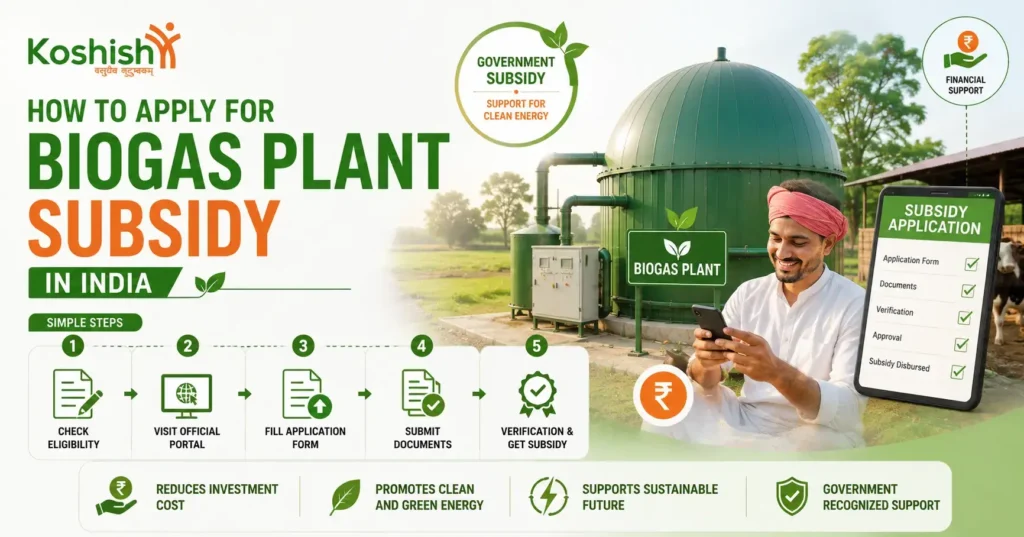
The poultry farmers require to apply for the MNRE poultry subsidy; these are the steps to apply for the poultry biogas subsidy in India.- Project feasibility assessment and DPR preparation.
- Apply through the designated MNRE portal.
- Obtain in-principle approval before commissioning.
- Complete installation and performance testing.
- Submit commissioning and performance documents for subsidy release.
Financial Benefits for Poultry Farm Owners
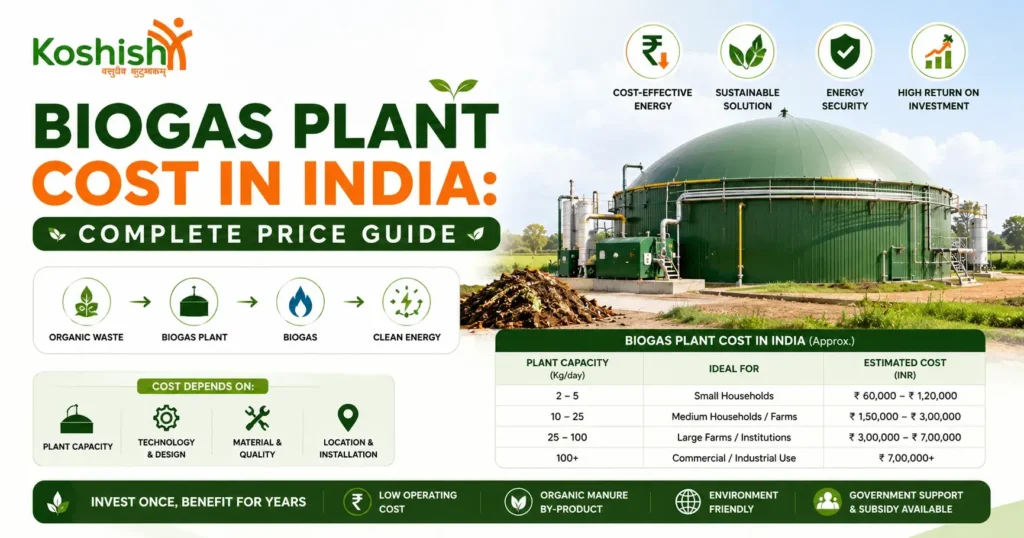
Now, we’ll be discussing the biogas scheme poultry farms owners’ financial benefits. Capital Subsidy: The actual price of the Commercial Biogas Plant reduces because of the MNRE poultry subsidy. Lower Energy Bills: The commercial biogas plant partially cuts electricity bills as it gives the farm owner the freedom to produce his or her own electricity. Organic Manure: The extracted organic slurry from the organic waste is used for generating revenue from selling it. Better Waste Management: The disposal of waste management becomes easier for the poultry farm owner. Faster ROI: The commercial biogas plant improves project economics by 3-5 years of ROI. Notes: The Bio-CNG projects with a larger cost margin get support from CFA under MNRE guidelines, depending on the plant capacity and performance.Wrapping Up
Government subsidies are making poultry biogas plants more financially friendly for farmers than ever. With support from MNRE’s National Bioenergy Programme and Waste-to-Energy initiatives, poultry farm owners can reduce waste management costs, generate renewable energy, and create additional revenue streams. Investing in a poultry biogas plant can be both an environmental and economic advantage for modern farms.Frequently Asked Questions (FAQ)
Is there a specific government subsidy for poultry biogas plants in India?
Yes, poultry biogas plants can receive financial support under the Ministry of New and Renewable Energy (MNRE) programs, particularly the National Bioenergy Programme and Waste-to-Energy initiatives. The subsidy amount depends on the project’s size, technology, and output capacity.
Who is eligible to apply for a poultry biogas plant subsidy?
Eligibility typically includes poultry farm owners, Farmer Producer Organizations (FPOs), cooperatives, private companies, entrepreneurs, and other entities involved in renewable energy or waste-to-energy projects. Applicants must comply with MNRE guidelines and technical standards.
How much financial assistance can a poultry biogas project receive?
The level of assistance varies based on plant capacity and the type of project. Larger Bio-CNG and waste-to-energy projects may qualify for significant Central Financial Assistance (CFA), helping reduce the initial capital investment.
How can poultry farmers apply for a biogas subsidy?
Applicants generally need to prepare a Detailed Project Report (DPR), obtain approvals from relevant authorities, and submit their application through designated MNRE channels or the BioURJA portal. After project commissioning and verification, the subsidy is released as per program guidelines.
What are the benefits of installing a poultry biogas plant besides the subsidy?
The poultry biogas plant provides a systematic organic waste management way, reducing carbon emissions and waste disposal costs. The government supports the poultry biogas subsidy India.